
Last updated November 21, 2026
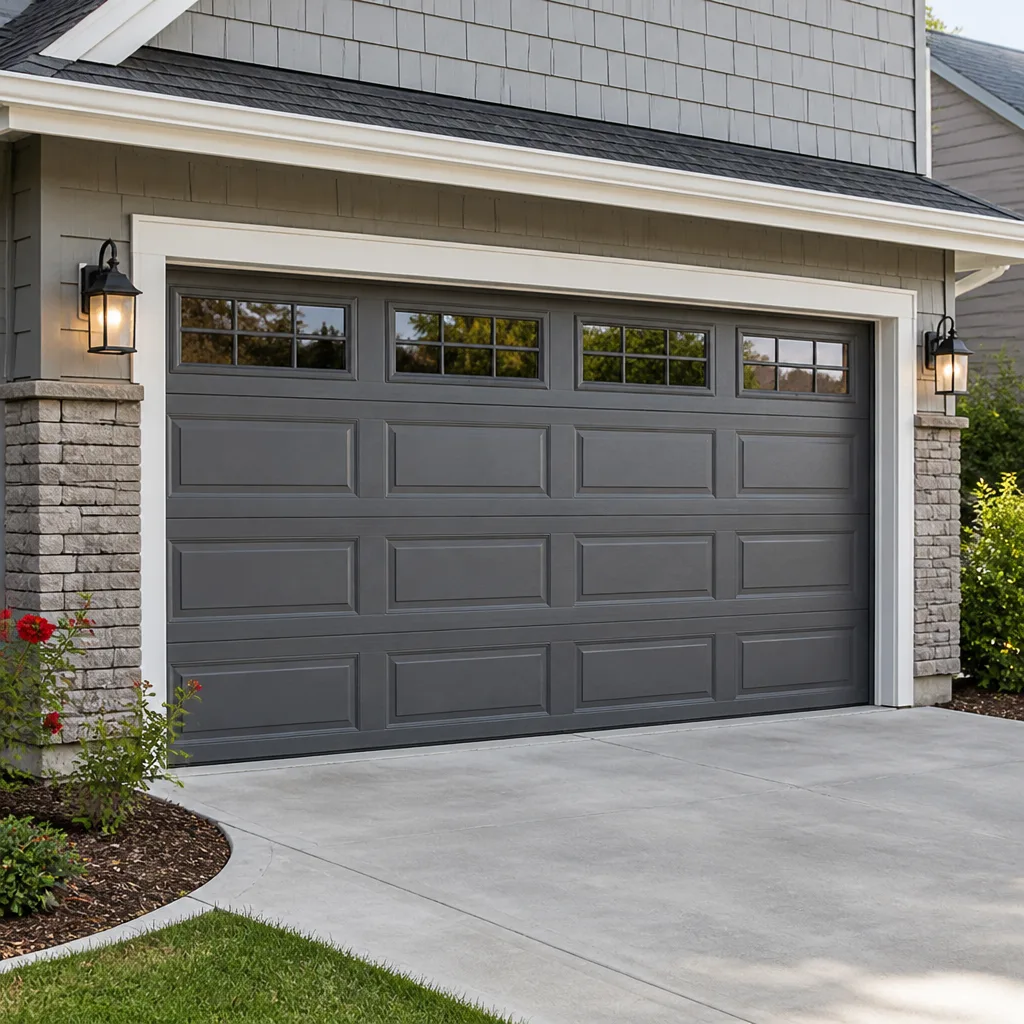 Raised-panel steel
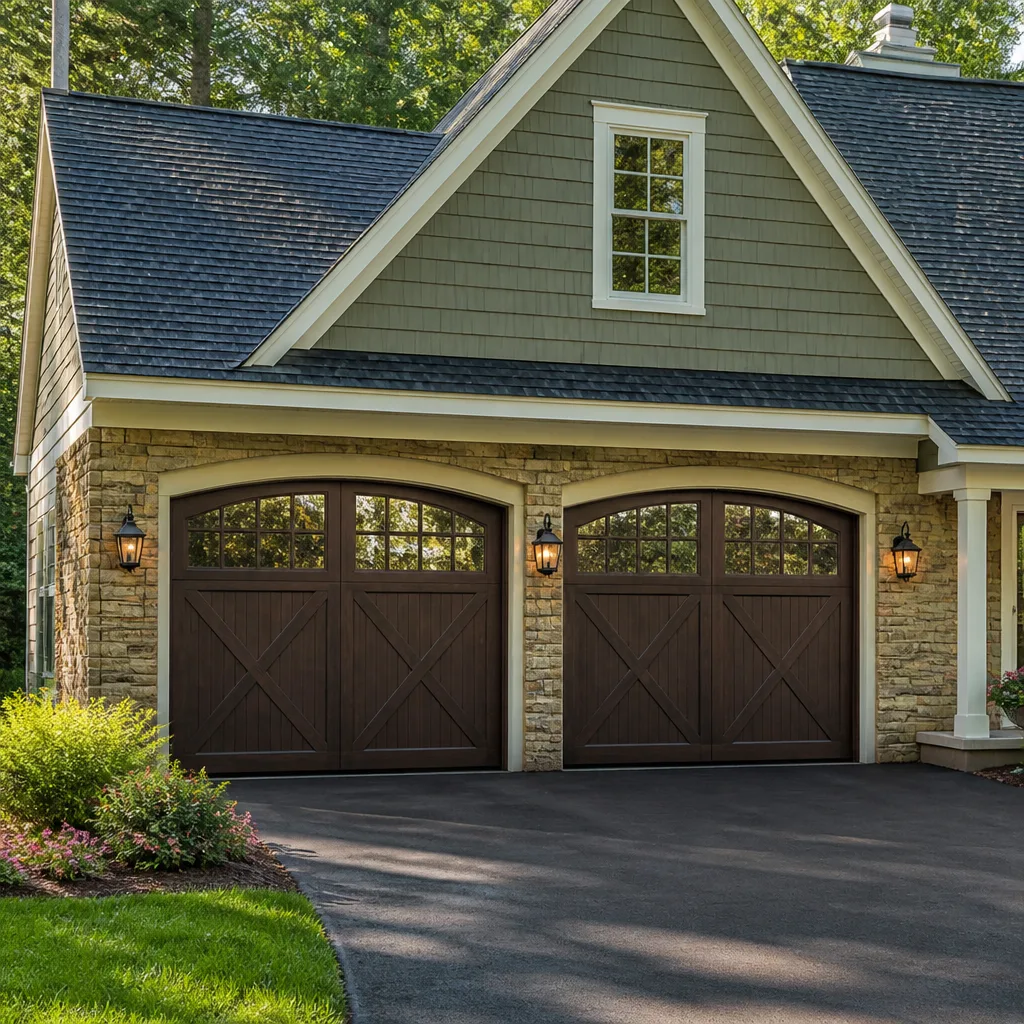 Carriage house
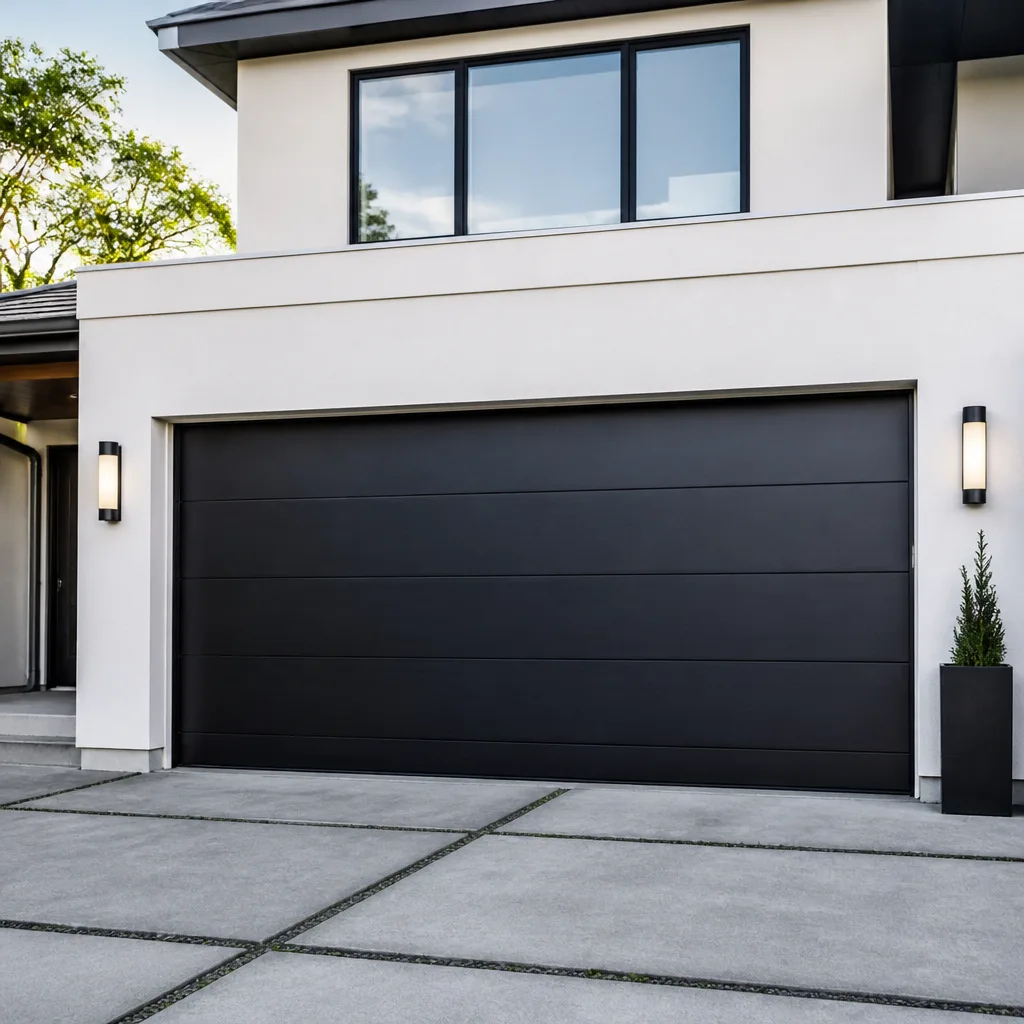 Modern flush
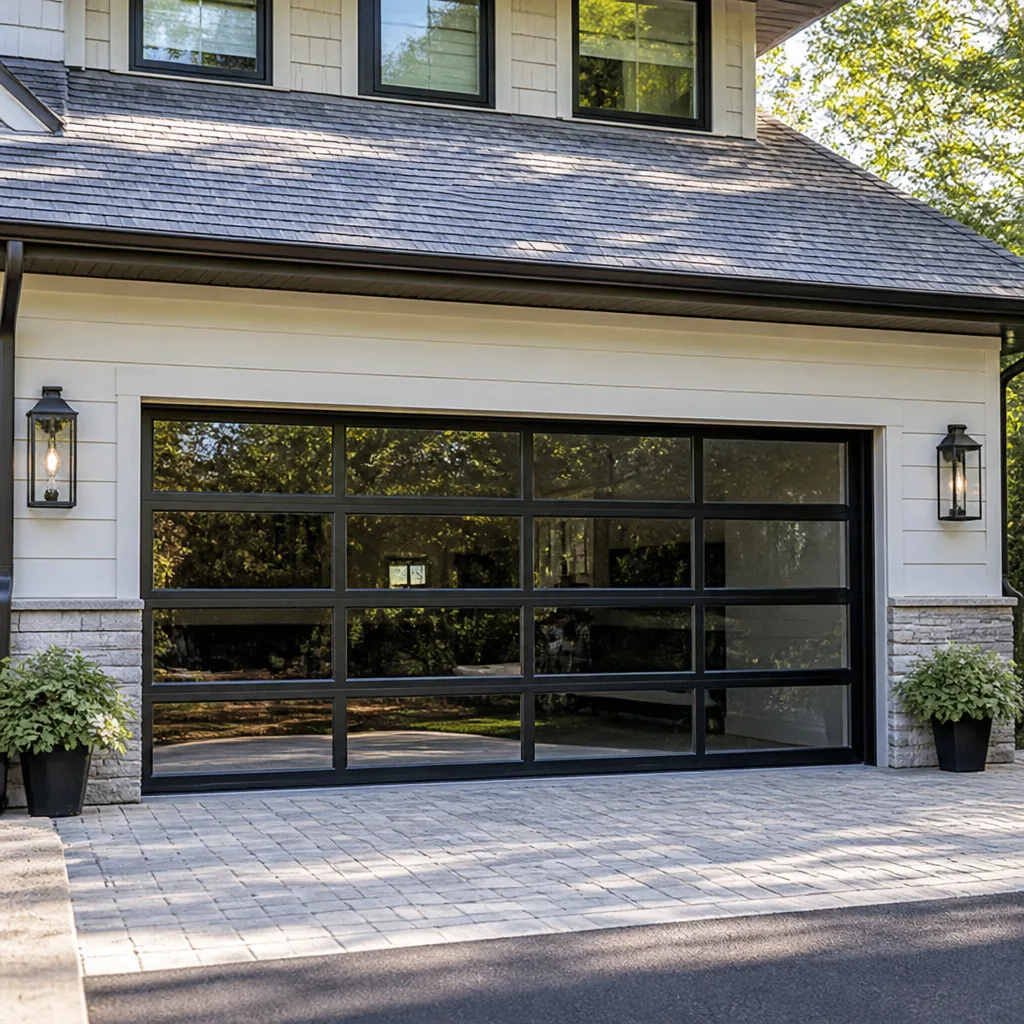 Full-view glass
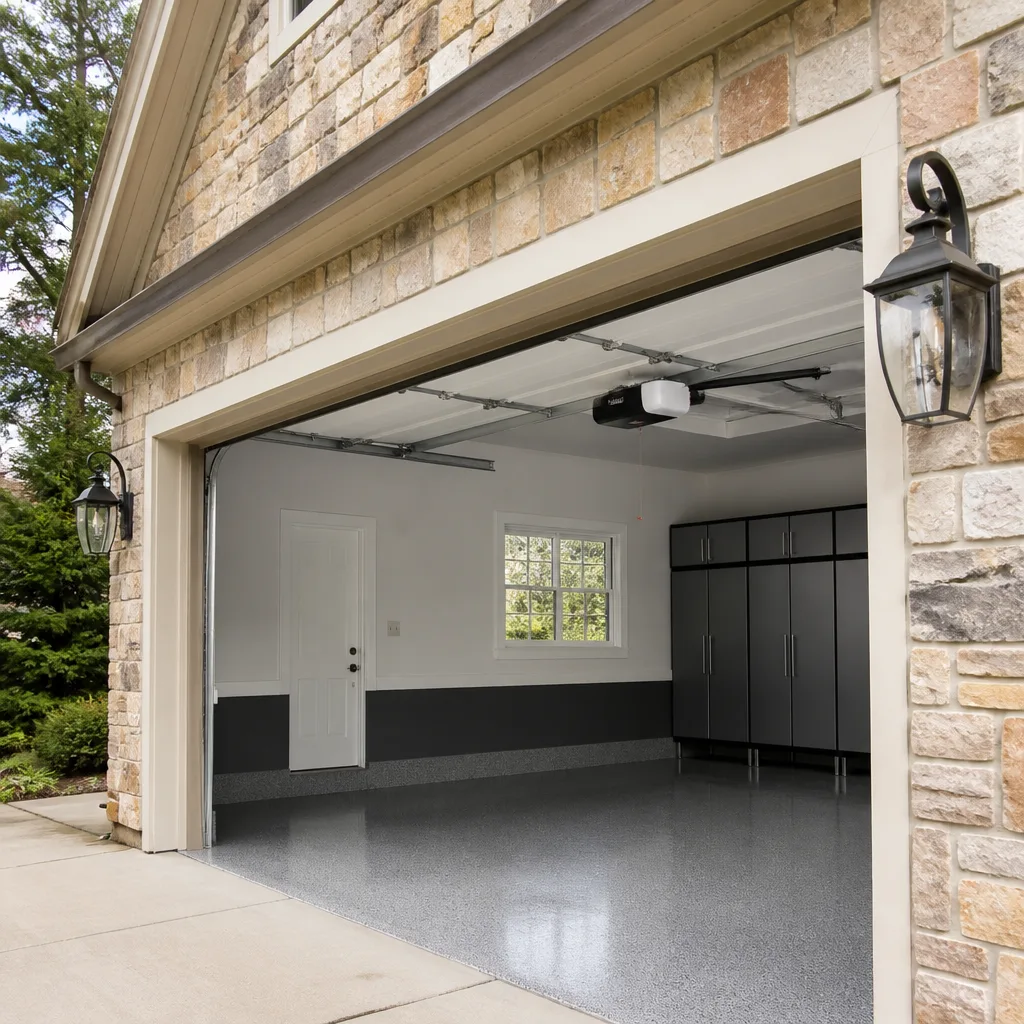 LiftMaster openers
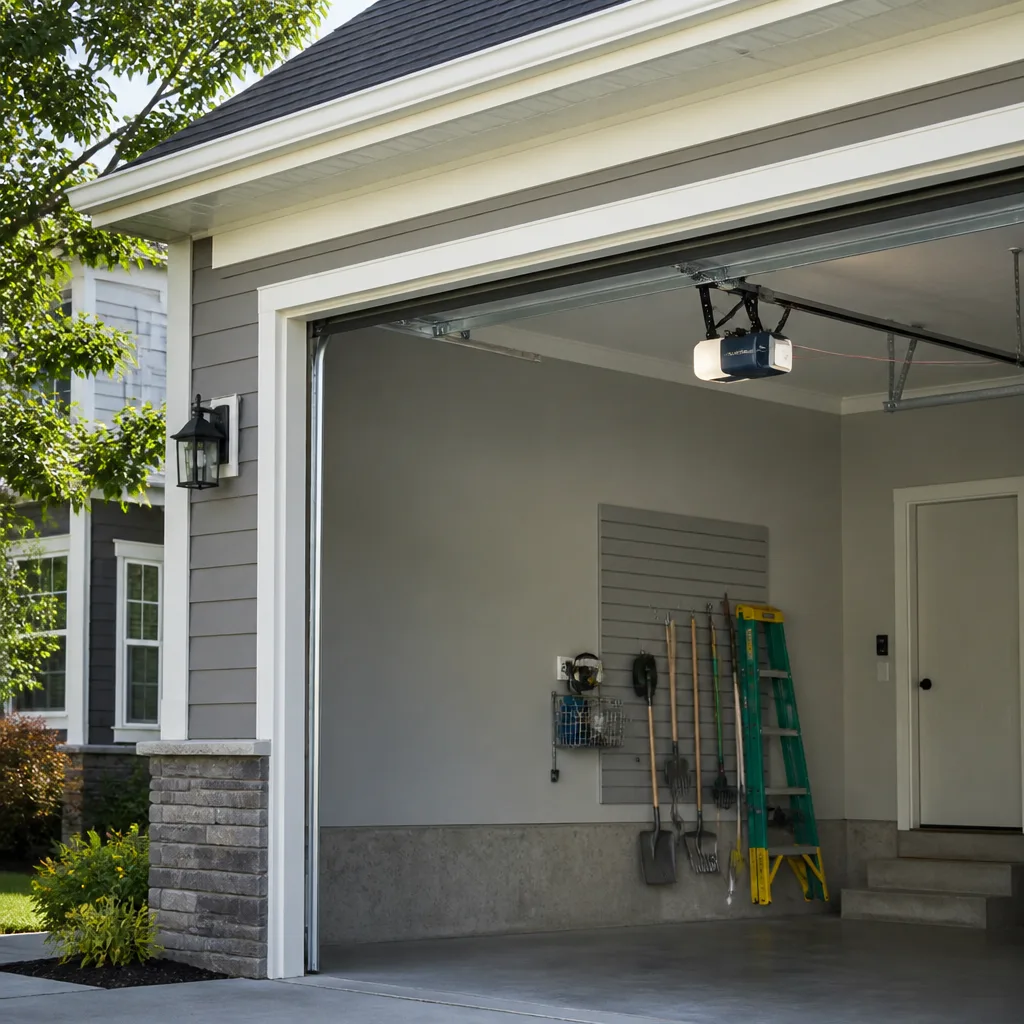 Chamberlain openers
Full 25-point door and opener safety check with every visit - springs, cables, rollers, tracks, and your LiftMaster or Chamberlain opener included
You get a price before we start. It does not change when the pro arrives.
Get your free estimateDIY vs Professional Garage Door: The Rhawnhurst Homeowner’s Decision Guide
Most homeowner debates about DIY versus professional come down to skill. Garage doors break that rule. A torsion spring under load holds enough stored energy to break a wrist or worse if it lets go at the wrong moment, and that’s the reason spring replacement isn’t a test of confidence – it’s a question of tool access and physics. This guide draws a precise line through the whole system: the jobs in a Rhawnhurst garage that a capable homeowner genuinely should handle, the ones that carry injury risk or void a manufacturer’s guidance, and the economics that make an improper DIY fix more expensive than the repair it replaced. By the end you’ll know exactly which tasks are yours and which need a specialist.
Quick Answer
In Rhawnhurst, DIY is the right call for weatherstripping, lubrication, sensor alignment, and remote reprogramming. Spring work, cable work, panel replacement after structural damage, and opener installation are professional jobs – the first two because of stored-energy injury risk and the second two because of wiring, balance, and manufacturer requirements. Anything involving the torsion system should never be a homeowner project.
Styles & brands we work with
- Raised-panel steel
- Carriage house
- Modern flush
- Full-view glass
- LiftMaster openers
- Chamberlain openers
Table of Contents
- Which Garage Door Tasks Are Genuinely Safe for a DIYer?
- Why Torsion Springs Are Not a DIY Job
- Panel Replacement: Cosmetic Versus Structural Damage
- What Opener Installation Guides Don’t Tell You
- The Hidden Cost of an Improperly Balanced Door
- Rhawnhurst Climate and Housing: What It Means for Your Door
- Liability, Safety, and the Real Reason Pros Exist
- When to Call a Professional
Which Garage Door Tasks Are Genuinely Safe for a DIYer?
A garage door is a mechanical system with one high-energy component and several low-stress ones, and the low-stress jobs are genuinely within reach for most homeowners. Weatherstripping along the bottom and sides of the door, for instance, goes brittle after a few winters of Philadelphia freeze-thaw cycles, and replacing it is a straightforward swap once you match the profile and thickness. Lubrication is even simpler and does more for long-term health than any other homeowner task – the rollers, hinges, and spring bearing plates all want a light coat of a proper garage door lubricant, not grease or WD-40. Sensor alignment, when a door won’t close, is usually a matter of cleaning the lenses and checking that the two photo eye units face each other. Remote reprogramming after a battery change or a new remote purchase is a five-minute job with the opener manual in hand.
The pattern here is worth naming. If the task involves nothing that stores energy, nothing that holds the door’s weight, and nothing that touches the electrical panel, a homeowner with basic tools should feel comfortable. A few examples:
- Bottom weather seal replacement – slide out the old seal, slide in the new one. No load on the door.
- Hinge and roller lubrication – twice a year keeps the door quiet and reduces wear on every moving part.
- Photo eye sensor cleaning and alignment – the most common cause of a door that reverses immediately.
- Remote and keypad reprogramming – a manual-reading task, not a mechanical one.
- Visual inspection – check for frayed cables, loose hinges, or a door that doesn’t sit flush when closed. Catching these early is what prevents bigger fixes later.
We work on doors across Rhawnhurst where the only real problem was a dirty sensor or a worn seal. Those jobs are quick and cheap DIY, and we’d rather a homeowner knows that than calls us for something they could have fixed at the kitchen table with a manual. The line we draw is where stored energy, structure, or wiring enter the picture.
Where the DIY line actually sits
Three things push a job from homeowner-territory into specialist-territory: high-tension springs, cables under tension, and any task that changes the door’s balance. Those three are also the three things that cause the vast majority of garage door injuries. If a repair involves adjusting either the torsion system or the lift cables, stop. Every other repair can be evaluated case by case.
Why Torsion Springs Are Not a DIY Job
Torsion springs hold the door’s entire weight and the counterbalance to it, and they do it under continuous torque. That’s the honest reason spring work is different from panel painting or sensor cleaning. It isn’t that a homeowner couldn’t turn a winding bar – it’s that if the spring slips while the bar is in the cone, the bar becomes a projectile and the door drops. A winding bar isn’t a tool you substitute. There is no acceptable substitute, and there is no safe method for winding a torsion spring with ordinary hand tools.
Extension springs, common on older doors in neighborhoods like Castor Gardens and Lawndale, are a different animal but carry their own risk – they stretch instead of twist, but they store the same counterbalance energy, and when they fail they fail violently unless they have containment cables. Both types fall on the professional side of the line for the same reason.
Spring replacement involves a handful of things that don’t exist in the homeowner drawer:
- Proper winding bars sized to the cone set screws on your specific drum.
- Correct replacement spring sizing – spring wire diameter, inside diameter, and length together must match the door’s lift, not just look like the old one.
- Balance testing on the door after installation, with the opener disconnected, to confirm the door holds position mid-travel.
- Safety cable installation on extension springs where it’s missing or rusted.
- A safe release procedure for the old spring if it’s still under partial tension.
Our technicians have up to 14 years of experience with torsion and extension spring work, and ours is the trade’s most common failure point because the loads are heavy and the cycles are constant. Spring repair is one of our front-line services, done in-house rather than referred out – which is what lets us talk about the process here candidly. If a spring has broken, the safe thing is to stop using the door and have a professional look at it. We’ll bring the right bars, the right spring, and the balance test. That’s what a garage door repair visit for spring work looks like.
What “safety issue, not just a repair” means in practice
When a spring breaks, the door’s weight drops onto the opener and the cables. If a homeowner runs the opener anyway, the opener’s gears take the load they were never designed for. Wear accelerates, and what would have been a spring replacement becomes a spring plus opener job. The one safe move is a door that stays shut and closed until a specialist looks at it.
Panel Replacement: Cosmetic Versus Structural Damage
A cosmetic dent in a steel or composite panel is a paint-and-filler job for a homeowner with ambition. A panel where the door has been pushed out of square, where the hinge stile is deformed, or where the track has bent is not a cosmetic issue – it’s a structural one and it’s the point where the door needs professional realignment. The decision tree below is the simplest way to think about it.
- Dent, no misalignment, no operating noise: cosmetic. Cosmetic repair or panel swap is a reasonable DIY job for a homeowner comfortable with painting and matching the panel profile.
- Dent with visible door sag or gap at a hinge: structural. Stop and call – the door’s framing is compromised enough that continued cycling will bend the track.
- Dent over a hinge stile with a visible crack in the panel: structural. Panel replacement required, not filling – the panel’s structural integrity is gone.
- Door won’t close flush, or one side sits lower than the other: alignment issue. This is a matter of cables and tracks, not panels, and needs professional work.
- Track physically bent: stop using the door. A bent track grabs the rollers and forces the door out of the opening.
For a full panel or section replacement, matching the profile, color, and rib pattern across Clopay, Amarr, and Raynor doors is where most homeowners get stuck. Manufacturers run different die profiles between model years, and a “close enough” panel shows from the street. If the door is old and the panel is discontinued, that’s the point where garage door installation of a new door may cost less than tracking down a matching section.
What Opener Installation Guides Don’t Tell You
Every new opener box in Rhawnhurst contains an installation manual that assumes a few things about your garage that are often not true. The manual assumes a nearby ceiling outlet within reach of a short power cord. It assumes ceiling joists running perpendicular to the door so the rail brackets can land on lumber. And it assumes the door is balanced, the tracks are plumb, and the opening is a clean rectangle. In a lot of Rhawnhurst garages – brick rowhouses, rear garages, older stock – at least one of those assumptions fails.
Here’s what the manuals skip:
- Power cord runs. The opener cord is short by design. If the nearest ceiling outlet is on the far side of the garage, the manual doesn’t help – you’ll be adding an outlet or a drop cord, and either one is electrician territory if it isn’t existing.
- Joist conditions. Older garages sometimes have ceiling joists worth doubling up, sistering, or adding an intermediate rail support to. That’s carpentry beyond the manual.
- Header bracket anchoring. On a brick header or a header with no solid lumber behind it, the bracket needs proper anchoring hardware or the door’s pull will loosen it over time.
- Safety sensor wiring. The photo eyes have to be wired back to the opener head. The manual shows the concept; it doesn’t show you the run around track brackets, corner framing, and a finished ceiling.
- Force and travel adjustment. Out of the box, the opener has default force and travel limits. Pairing them to a specific door’s weight and travel is what keeps the opener from reading a hard spot as an obstruction.
When we set up a new garage door opener repair or install, we check the door’s balance before installing anything. A LiftMaster or Chamberlain head installed on an unbalanced door will repeatedly hit its force limit and burn out faster than it should. Genie and Craftsman units are the same story – the installer training and the manuals are written for a balanced door, full stop.
Battery backup and smart openers
Newer openers commonly ship with battery backup and Wi-Fi connectivity, and both add complexity the manual handles awkwardly – pairing the opener to a home network often requires walking a phone through a router signal check while standing on a ladder. It’s doable, but it’s the sort of thing that eats an afternoon. We handle remote pairing, keypad programming, and integration as part of installation.
The Hidden Cost of an Improperly Balanced Door
The single biggest mistake we see isn’t a bad spring install – it’s a door that functions but isn’t balanced. An unbalanced door puts uneven load on the opener, and that load shows up as gear wear inside the opener housing over the following 6 to 12 months. The owner’s first hint is a louder opener, then a sluggish reverse, then a stopped opener, and by then the small balance issue has become a full assembly replacement. The DIY save isn’t a save; it’s a deferred bill with interest.
Balance testing is simple: disconnect the opener from the door with the manual release, lift the door to roughly waist height, and let go. A properly balanced door stays where you put it or drifts slowly. A door that drops hard is unbalanced in one direction, and a door that climbs is unbalanced in the other. Both mean the springs are set wrong, the cables are uneven, or the door has a structural problem.
What an unbalanced door actually does, in order:
- Forces the opener to push harder. The opener’s force limits compensate by ramping travel force up, which is fine on the surface.
- Wears the drive gear unevenly. The opener’s drive gear and the trolley both wear unevenly against the resistance.
- Adds heat. The motor runs longer per cycle, so it runs hotter and cools less between cycles.
- Shortens opener life. Over 6 to 12 months, the wear becomes structural and the opener fails – usually on a cold morning.
The fix isn’t the opener. The fix is the balance – springs, cables, or track adjustment on the door itself. We do the balance test as part of any service visit because without it, an opener replacement is going to fail the same way the last one did. For our customers in Rhawnhurst, that means the cost of fixing the balance is often the difference between one service call and three.
Rhawnhurst Climate and Housing: What It Means for Your Door
Rhawnhurst is Philadelphia rowhouse and twin country – brick stock, rear alleys, and a lot of garages that were built for a car that was smaller than the one parked in them now. The doors we work on here are varied: some new steel panel doors on newer builds, plenty of older wood-frame doors that have been through decades of freeze-thaw cycles, and a fair number of doors that were last serviced long before the current owner moved in. The seasonal pattern matters for a homeowner’s DIY list.
Philadelphia winters push water under bottom seals and into the panel joints, and every one of those freeze-thaw events works the seal a little further. Spring arrives with the seal cracked and the door’s metal panels taking on moisture. Summer heat expands the steel, which is when a door that was barely hanging on starts dragging on one side. Fall is when most homeowners notice, because that’s when the door starts to stick in the cold. The pattern isn’t unique to any one Rhawnhurst block – it’s what we see across the neighborhood year over year.
- Spring: check the bottom weather seal, inspect for moisture in the panel joints, clean and re-lube the rollers and hinges.
- Summer: watch for a door that drags or sticks – expansion often triggers a balance problem that had been hiding.
- Fall: check the springs for gaps or rust streaks, tighten any loose hinge bolts, and service the opener’s drive gear.
- Winter: keep the sensors clean of snow and de-icer spray, and don’t force a stuck door – if it’s stuck, call us.
Rear-alley garages in Rhawnhurst also tend to have a different reality than front-facing garages. The opener’s power outlet may be a single bulb socket, the ceiling may be open framing, and the track may sit closer to the header than a modern install manual assumes. None of that is unusual; it just means the install visit budget is different from a straightforward new-build garage. When we quote a job in Rhawnhurst, that’s what we’re factoring in.
Liability, Safety, and the Real Reason Pros Exist
The safety case for using a professional on garage doors isn’t about a homeowner’s competence. It’s about what happens if the door fails and someone is standing under it. A torsion spring, cable, or panel that fails in a specific way can drop the door – and the door weighs hundreds of pounds. If the failure comes back to a repair performed outside manufacturer guidance, most door and opener warranties are affected. We can’t speak for a specific brand’s warranty language, but the general pattern across LiftMaster, Chamberlain, Genie, and the other major brands we service is that unauthorized repairs limit coverage on the affected component.
Beyond the injury and warranty questions, there’s a structural one. A door that has been worked on improperly can pass a visual check and still be dangerous – the cables can look fine right up until the day they don’t. Cables on extension-spring doors in particular can fail catastrophically if containment cables aren’t fitted. That’s not a repair a homeowner should attempt.
The combined picture: the DIY jobs are cosmetic and mechanical-lite, and they save real money. The professional jobs are the ones where a single mistake has consequences. There’s no gray area between those two.
Common Mistakes to Avoid
- Running the opener on a broken spring. Once the spring lets go, the entire weight of the door is on the opener and cables. Using the opener accelerates damage to both, and the safest move is to stop using the door.
- Winding a torsion spring with hand tools. No substitute exists for a properly fitted winding bar, and the failure mode is a spring that releases suddenly. If the door won’t otherwise move, call – don’t attempt.
- Replacing an opener without checking the door’s balance. The new opener will fail exactly like the old one if the door is unbalanced. Test the balance first, then decide what the fix actually is.
- Using grease or standard penetrating oil on the rollers and hinges. Those attract grit and dust, which turns into accelerated wear. Garage door lubricant is a specific product for a reason.
- Patching or filling a structural dent. A panel dent near a hinge stile that has cracked the panel is a structural failure. Filler hides it for a season; the panel still needs replacing.
- Ignoring a dragging door through the summer. A door that drags in July will drag harder in January. The drag is usually an early sign of a balance problem or worn rollers, and fixing it early is much cheaper than fixing it late.
- Forgetting the safety sensors on a new install. A new opener without properly aligned photo eyes won’t close reliably, and the resulting “the door keeps reversing” call is one of the most common things we see.
See the difference
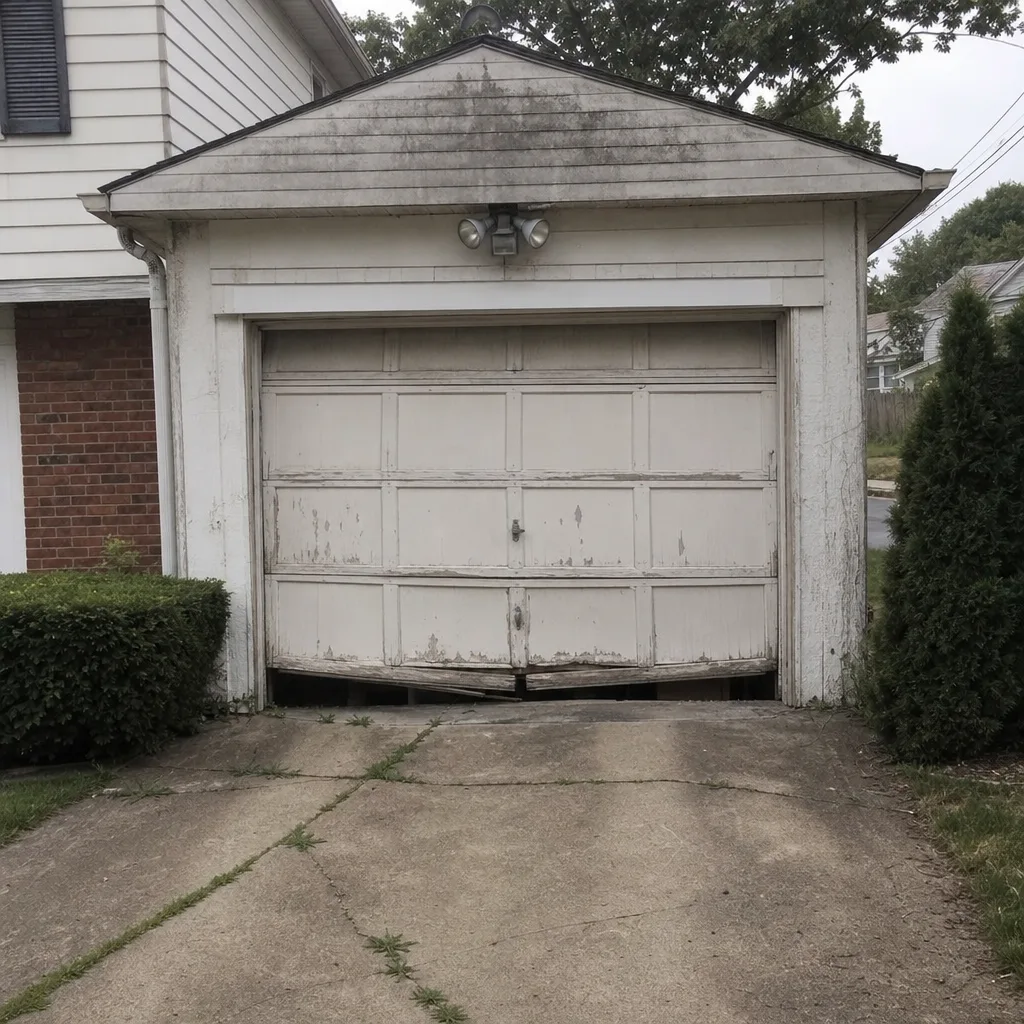 Before
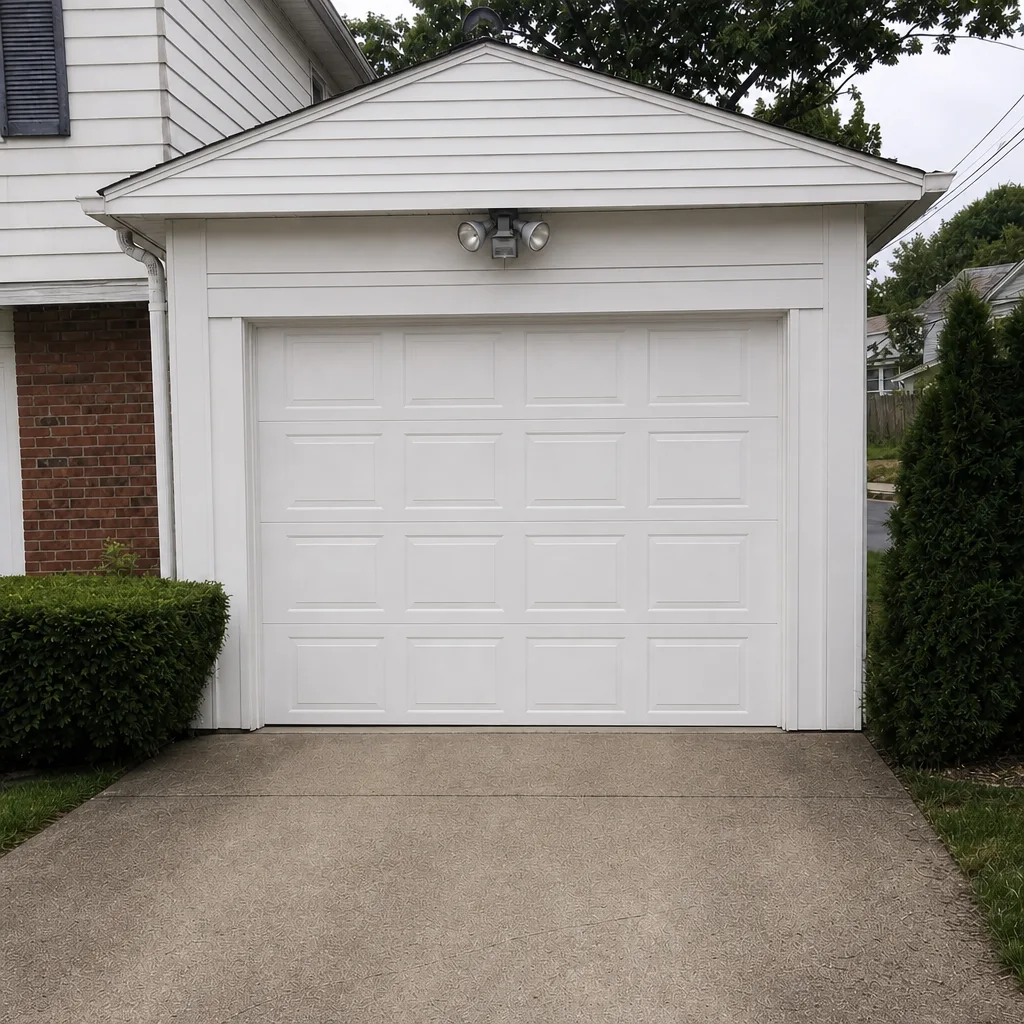 After
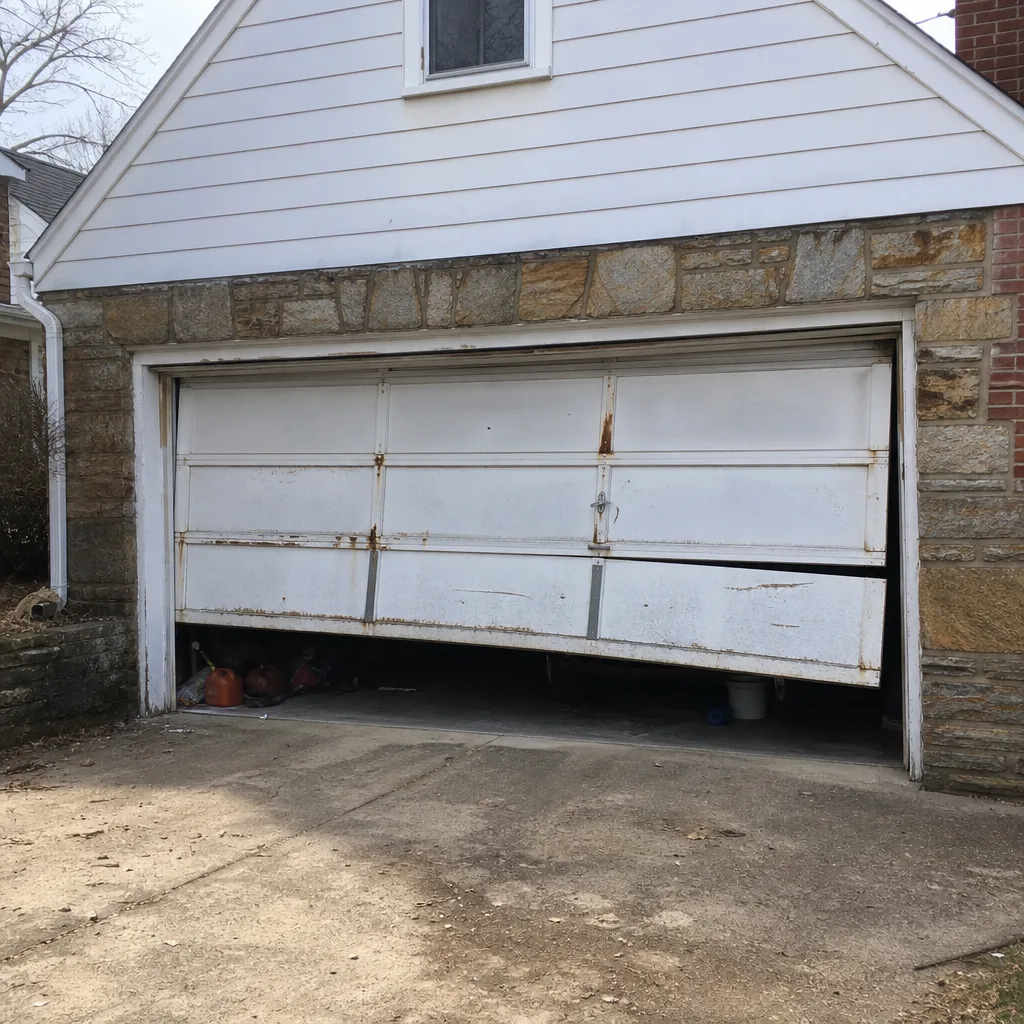 Before
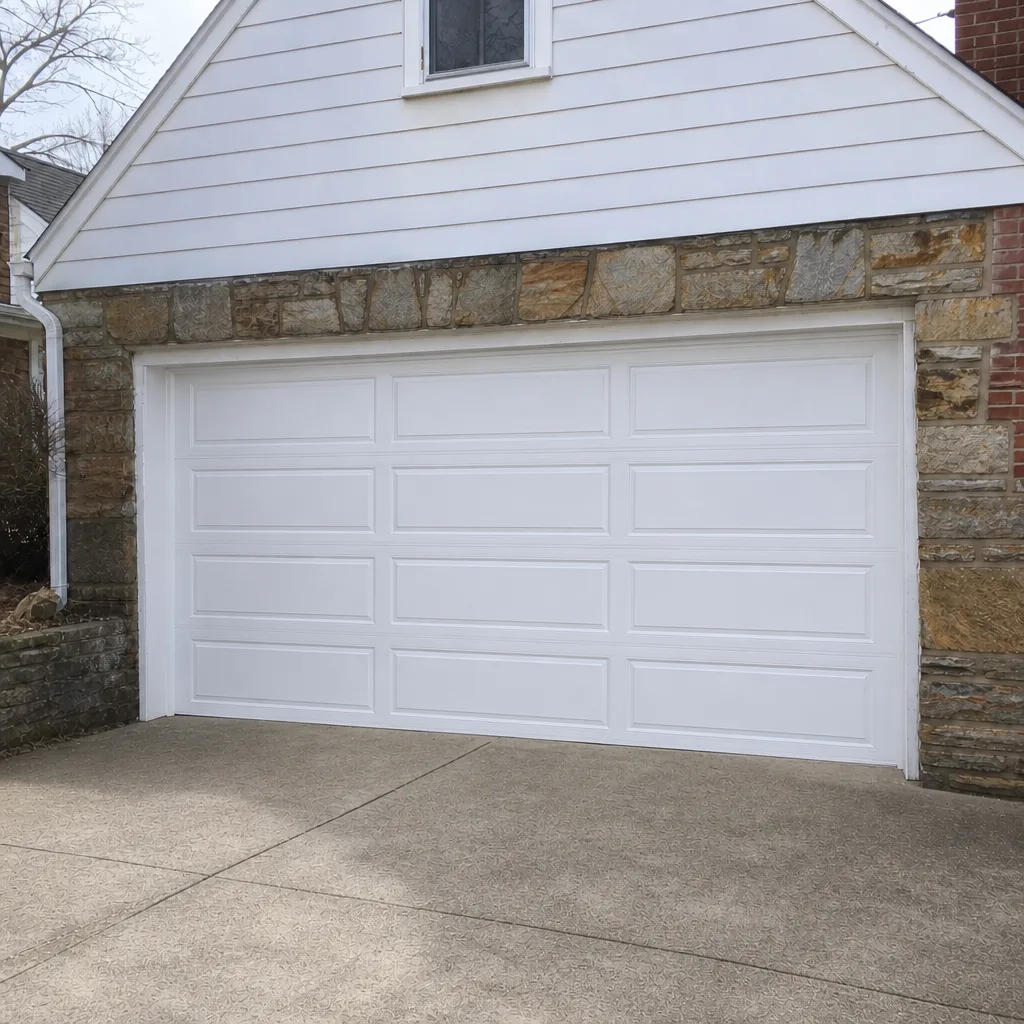 After
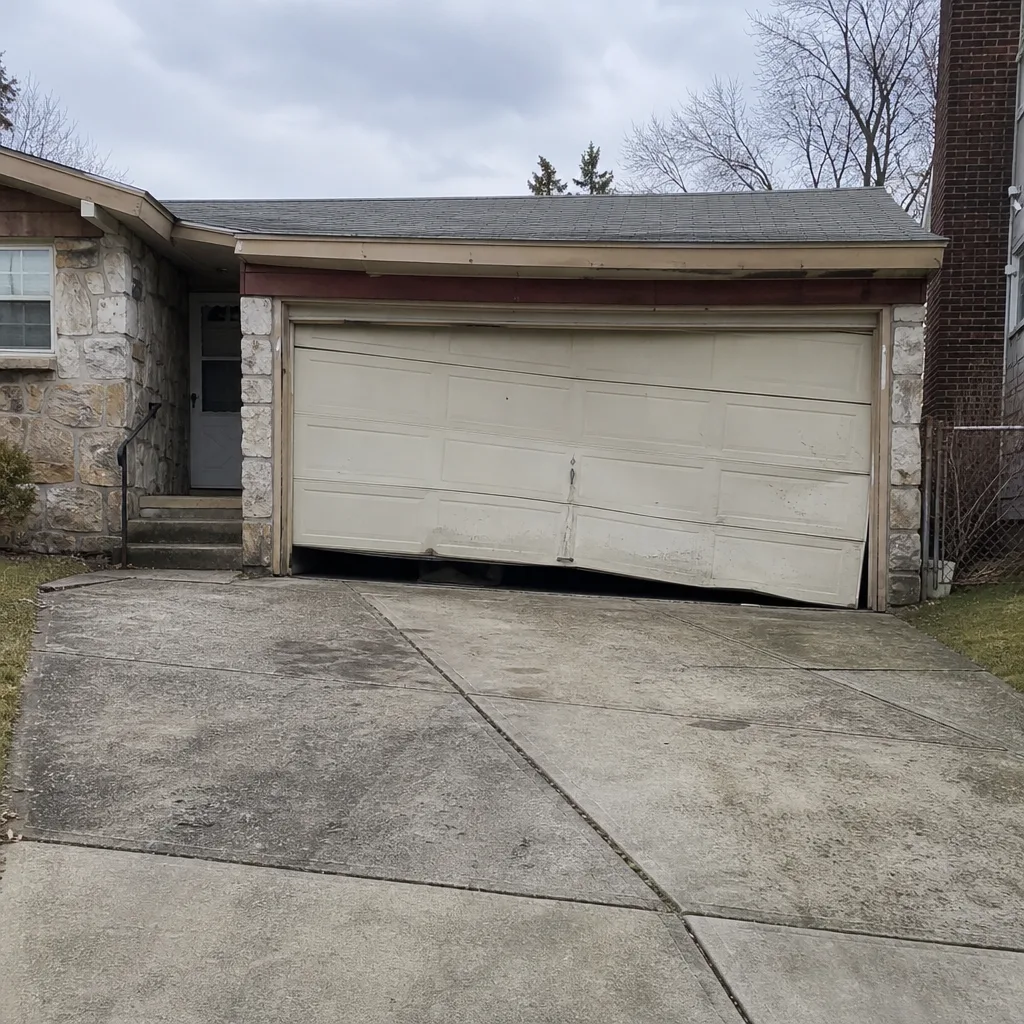 Before
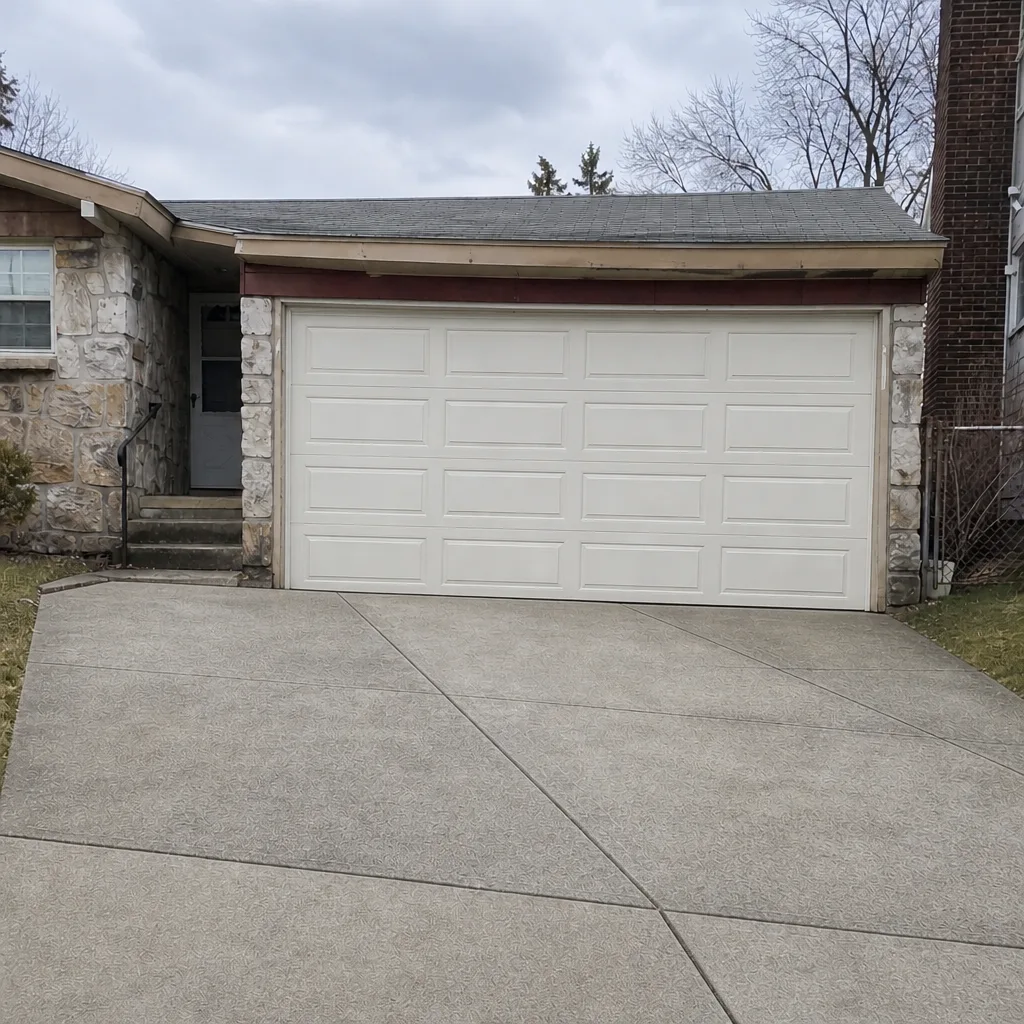 After
When to Call a Professional
Call us when the door involves a broken spring, a snapped or frayed cable, a door that’s come off its tracks, a door that won’t close flush, a panel with structural damage near a hinge or an opener that reverses, stalls, or makes a new noise. Any of those, plus any time the door won’t close and it’s dark out. We treat stuck open or stuck closed as an emergency and dispatch accordingly. Our technicians specialize exclusively in garage doors – not split across plumbing, HVAC, or general contracting – and they work on the eight brands we service: LiftMaster, Chamberlain, Genie, Clopay, Amarr, Wayne Dalton, Craftsman, and Raynor.
Garage Door Repair Rhawnhurst offers free estimates in Rhawnhurst. Call (877) 492-3530. We answer 24/7. Fast dispatch from 7am to 7pm, Sunday through Friday. The price is quoted and agreed before any work starts, and the written estimate sets the final price. If you’re not sure whether a job is DIY or professional, that’s a five-minute call. We’ll tell you honestly.
Frequently Asked Questions
No. Torsion and extension springs are under high tension and carry the door’s weight, and a spring that releases incorrectly while being wound can cause serious injury. Winding a torsion spring requires proper winding bars and a balance test after installation, and neither is a homeowner tool. Spring work is the one garage door task we recommend against DIY without exception.
On the tasks that are genuinely safe for a homeowner – weatherstripping, lubrication, sensor cleaning, remote reprogramming – DIY saves the full service call because those jobs take under an hour with basic supplies. On spring, cable, panel, and opener work, the DIY savings disappear fast because a failed repair turns into a bigger bill than the original job. The estimate is free either way, so a quick call before attempting a repair tells you which side of the line you’re on. Call (877) 492-3530 for an exact quote – estimates are free.
It’s possible, but the manufacturers’ manuals assume a ceiling outlet within reach of the power cord, ceiling joists that take the rail brackets cleanly, and a balanced door – and in plenty of Rhawnhurst garages at least one of those is false. If the wiring, joists, or door balance aren’t right, the opener won’t stay right either. Our technicians work on LiftMaster, Chamberlain, Genie, and the other major brands as a specialty, and the install includes a balance check first.
Disconnect the opener with the manual release, lift the door to waist height, and let go. A balanced door stays where you put it or drifts slowly. A door that drops hard or climbs is unbalanced, and that’s what wears out opener gears over the following 6 to 12 months. A balance test is part of any service visit we do in Rhawnhurst.
Most cities require a permit for structural garage door replacement, and the final answer depends on your specific project. Ask your city’s building department before you order a new door – the door profile and any structural changes to the header are part of what they’ll want to review. We can install the door; the permit question is one for the city directly.
Don’t force it. A door stuck open often indicates a cable or track problem, and forcing it can cause further damage or injury. Call (877) 492-3530 – we answer 24/7, and a call outside dispatch hours is booked into the next opening, Sunday through Friday, 7am to 7pm. Stuck open or stuck closed, we treat it as an emergency.
The Bottom Line
DIY is the right call for the low-stress side of garage door maintenance: weatherstripping, lubrication, sensor alignment, and remote reprogramming. It’s the wrong call for anything involving torsion or extension springs, cables, structural panel damage, or opener installation – those are the tasks where a single mistake has real consequences, and where the fix for a bad DIY attempt costs more than the job would have. The line is clear and it isn’t about skill. It’s about tool access, stored energy, and the door’s balance. If you’re near that line and don’t want to guess, we can help.
If you’ve read this far and a specific job is still nagging at you, call us. Garage Door Repair Rhawnhurst offers free estimates across Rhawnhurst, and we don’t upsell. We’ll tell you what the job is and what it takes, and you can decide. Call (877) 492-3530. We answer 24/7. Fast dispatch from 7am to 7pm, Sunday through Friday.
Written by the team at Garage Door Repair Rhawnhurst.