
Last updated November 21, 2026
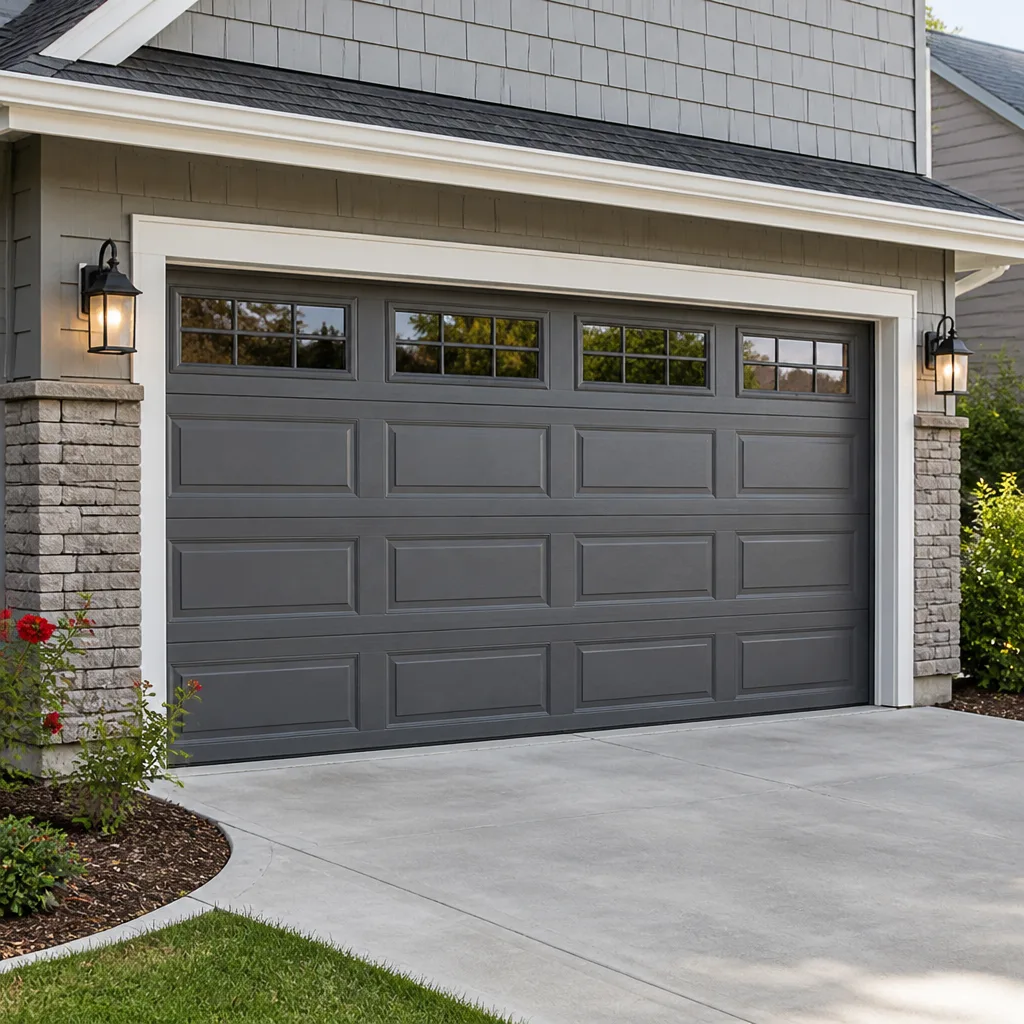 Raised-panel steel
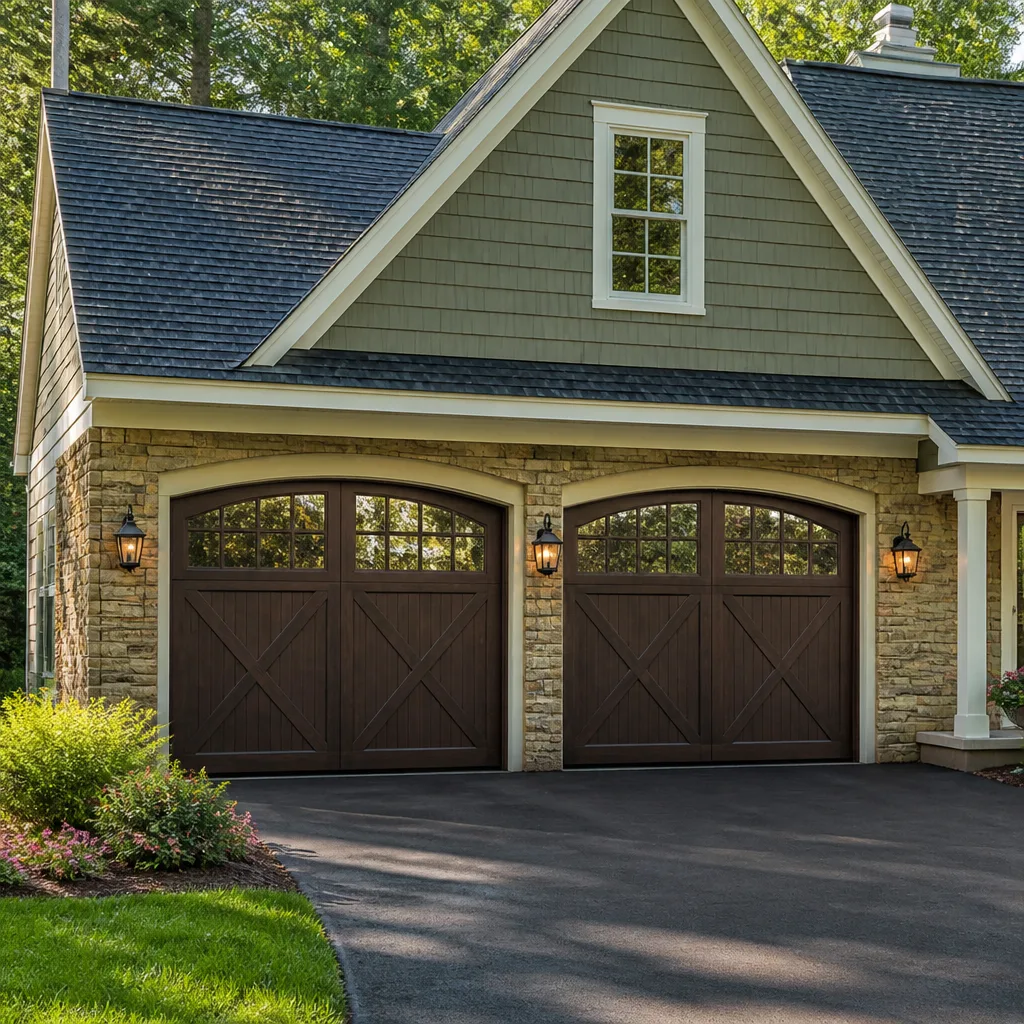 Carriage house
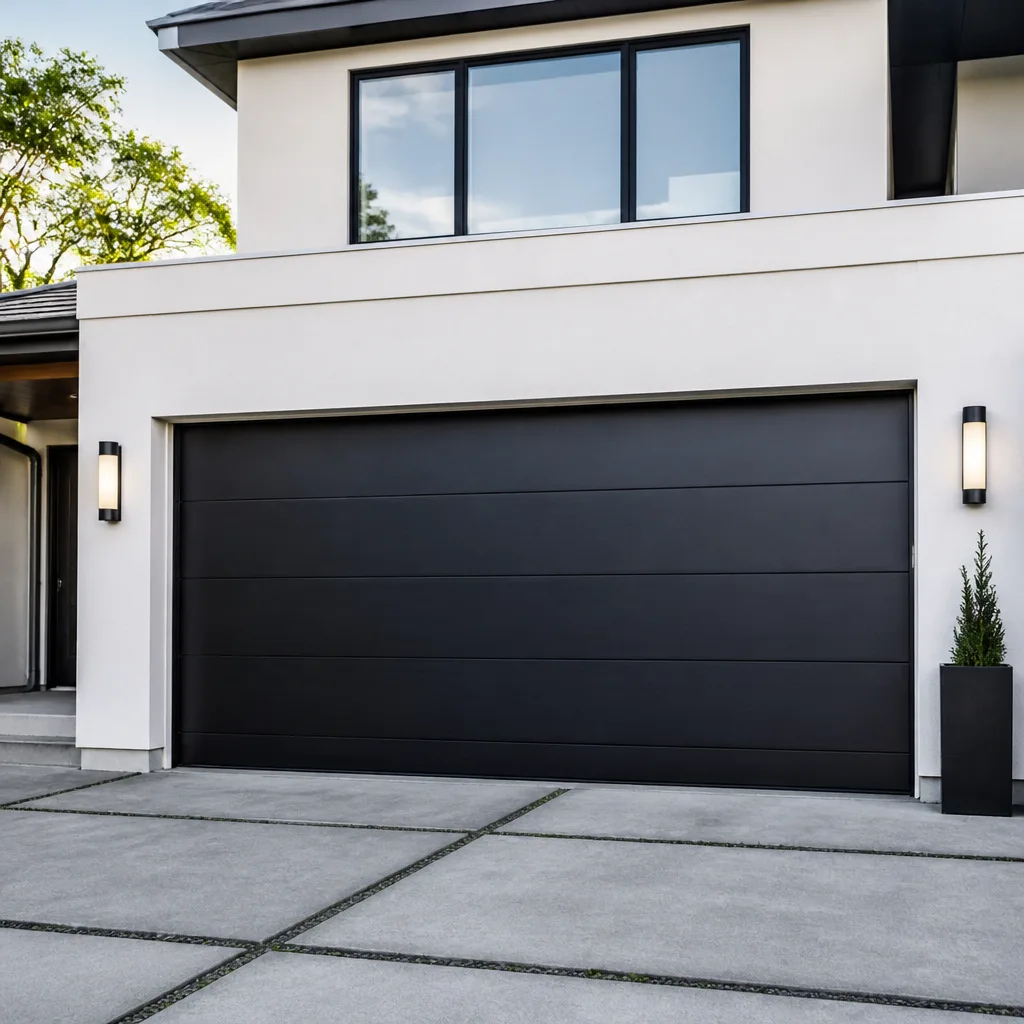 Modern flush
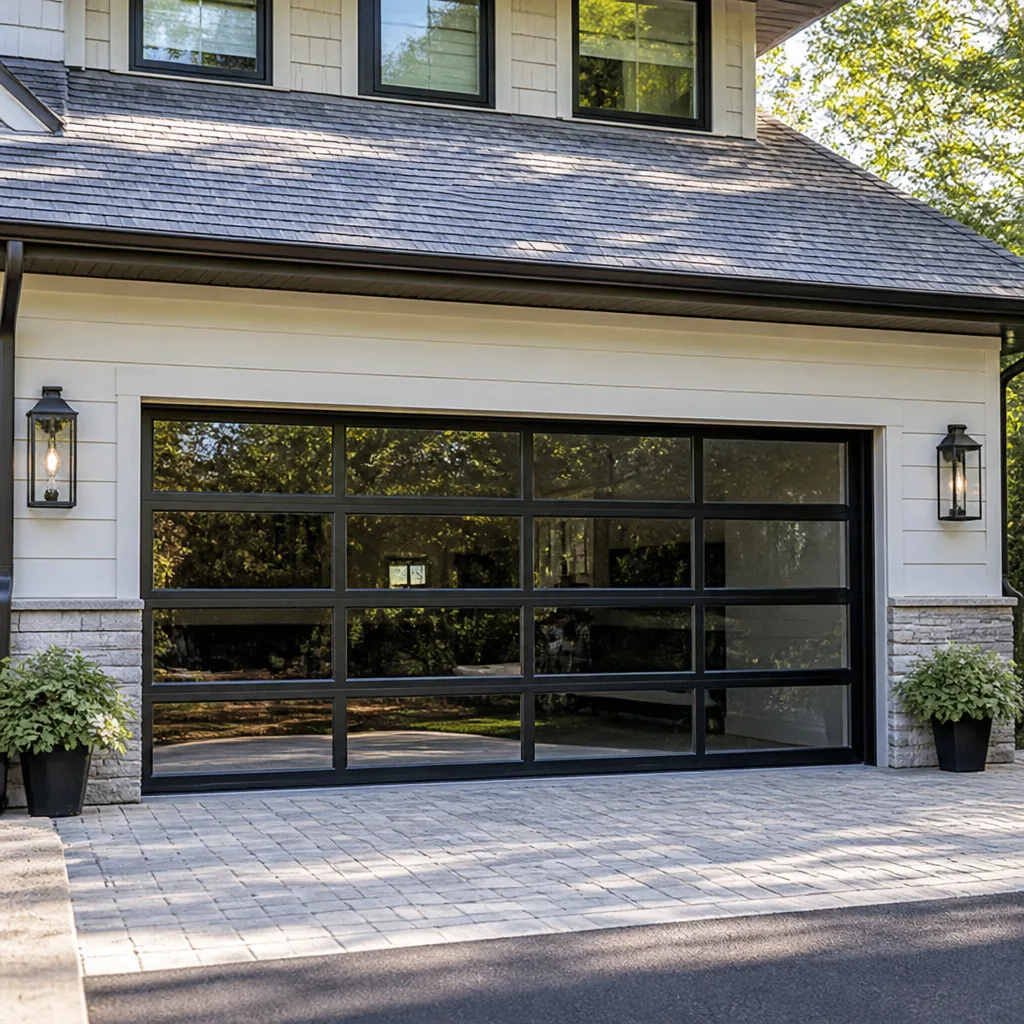 Full-view glass
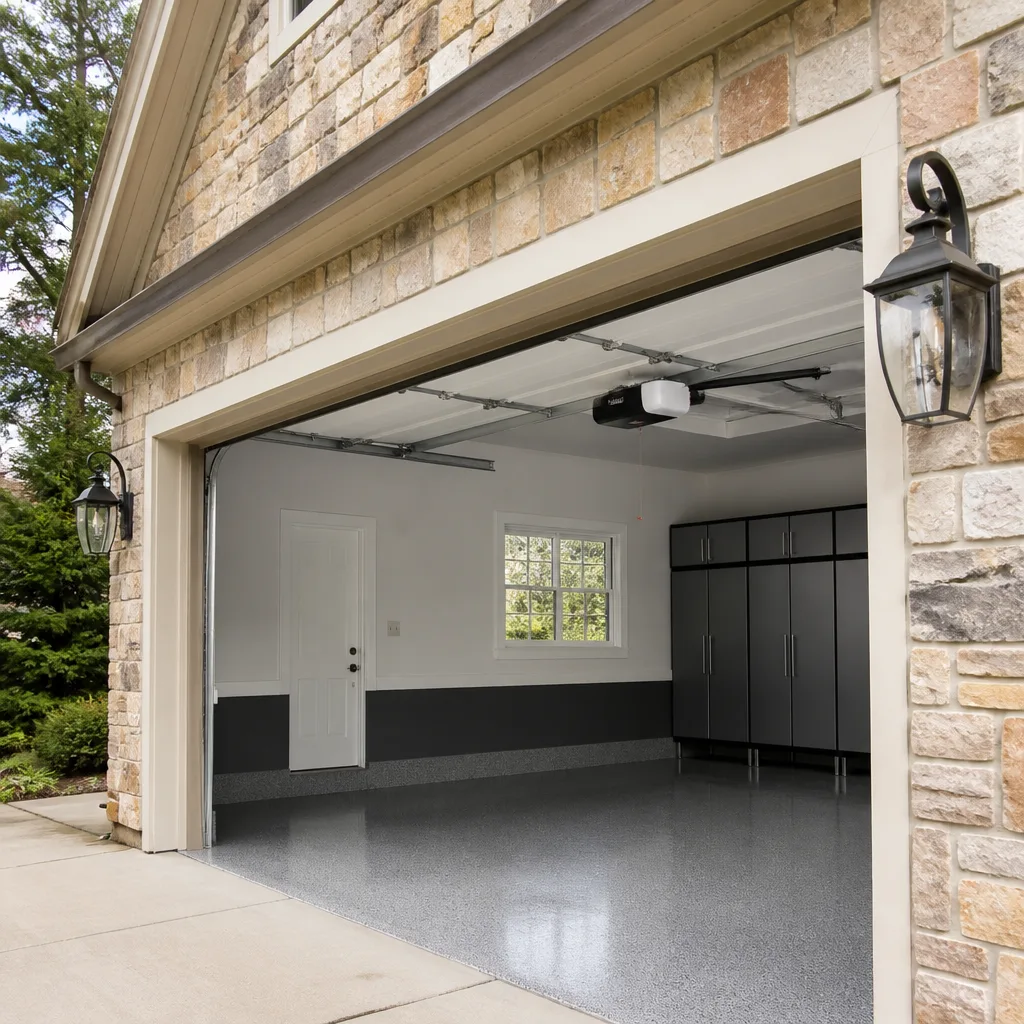 LiftMaster openers
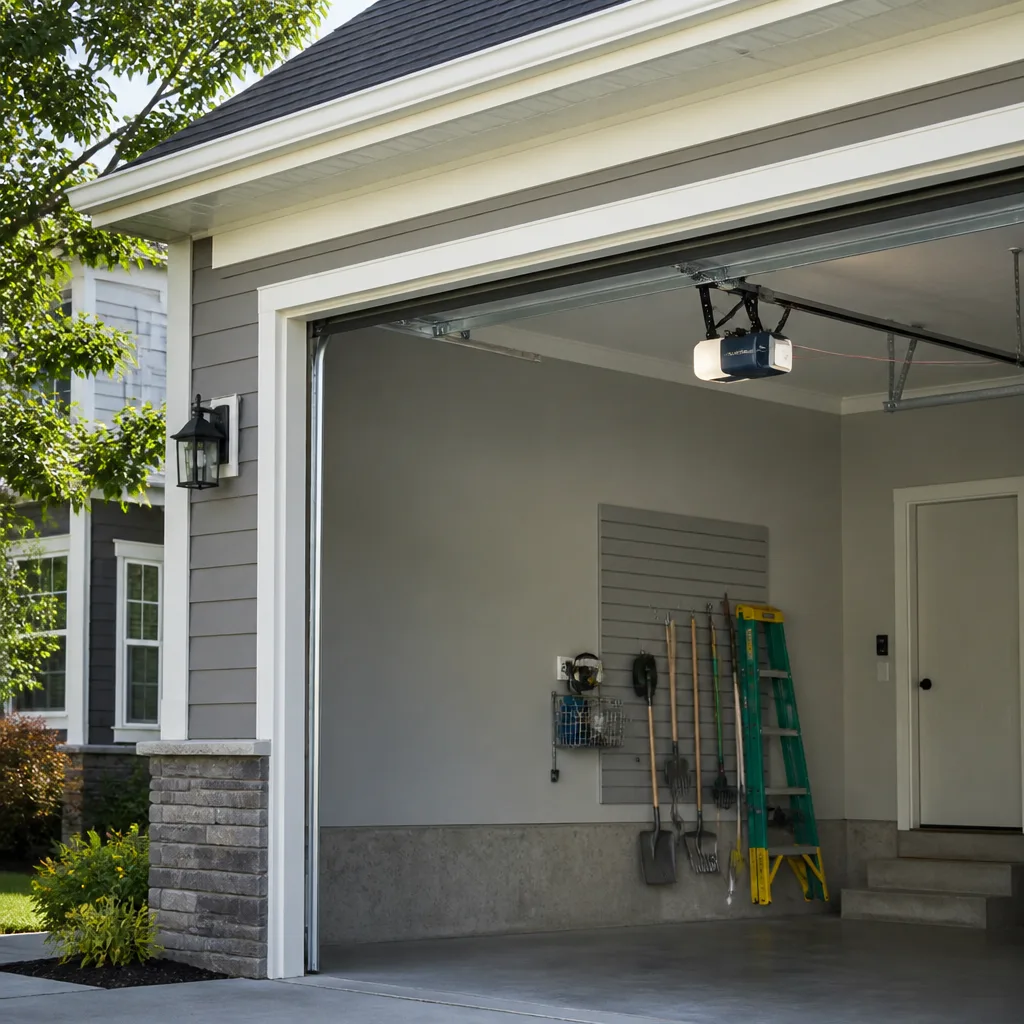 Chamberlain openers
Full 25-point door and opener safety check with every visit - springs, cables, rollers, tracks, and your LiftMaster or Chamberlain opener included
You get a price before we start. It does not change when the pro arrives.
Get your free estimateGarage Door Warning Signs: A Rhawnhurst Homeowner’s Reference Guide
A door that just slows down in the morning isn’t a quirk. It’s a symptom, and it almost always points to one of two things: a torsion spring that’s losing tension, or an opener working harder than it should against friction that wasn’t there last month. Those two problems have very different repair timelines and very different costs, yet from the driver’s seat they look identical. That’s the trap most Rhawnhurst homeowners fall into. They wait for something to break loudly when the door has been sending quieter signals for weeks. This guide maps symptoms to causes so you can tell a same-day fix from a schedule-this-week job, and know when to stop watching and start calling.
Quick Answer
Most garage door warning signs in Rhawnhurst fall into three categories: unusual sounds (grinding, squealing, popping), visual damage (frayed cables, bowed panels, gaps at the bottom seal), and opener behavior changes (slow reversal, hesitation at the top of travel, remote lag). Each symptom maps to a specific component. Popping or snapping means springs. Grinding points to rollers or bearings. Squealing is usually hinges or rollers that need lubrication or replacement. A door that reverses slowly or hesitates near the top is an opener issue, not a door issue, and should be diagnosed separately.
Styles & brands we work with
- Raised-panel steel
- Carriage house
- Modern flush
- Full-view glass
- LiftMaster openers
- Chamberlain openers
Table of Contents
- What Your Door’s Sounds Are Telling You
- Visual Warning Signs on Cables and Brackets
- Opener Behavior Flags That Get Misdiagnosed
- Panel and Seal Warning Signs
- Same-Day Fix vs. Schedule This Week
- Why Spring Warning Signs Are a Safety Issue
- Seasonal Patterns in Rhawnhurst
- Brand-Specific Warning Signs to Watch
What Your Door’s Sounds Are Telling You
Sound is the first warning system on any garage door, and it’s the one most homeowners misread. The mistake is lumping every noise into “the door is getting old.” It isn’t. Each sound has a different source, and matching the sound to the component tells you whether you’re looking at a $150 tune-up or a spring replacement.
Here’s the sound-to-cause map we use when we walk up to a door in Rhawnhurst:
- Grinding: Metal-on-metal contact, almost always at the rollers or the bearings in the hinges. A grinding door is dragging, which puts extra load on the opener and the springs. Left alone, grinding wear accelerates until the opener burns out or a spring fails.
- Squealing: High-pitched and consistent, this is usually a dry hinge or a roller that’s lost its lubrication. It’s the least urgent sound on this list and the cheapest to fix, but it’s also a sign the hardware hasn’t been serviced in a while.
- Popping or snapping: A sharp pop, often when the door first starts moving or when it reaches a certain height, usually means a torsion spring is starting to bind or an extension spring is stretching unevenly. This is the sound to take seriously. Springs are under extreme tension, and a popping spring is telling you it’s close to failing.
- Rattling: Loose bolts, worn hinges, or a track that’s worked loose from its mounts. Rattling is a structural loosening issue that gets worse with every cycle.
- Banging at the end of travel: The door slams into the floor or the header instead of stopping smoothly. This points to a limit switch setting on the opener or a spring that’s lost tension and can no longer cushion the door’s weight.
If you hear more than one of these at the same time, that’s a strong signal the door hasn’t been serviced in a long stretch. In our experience, a door that’s both grinding and popping usually has a roller problem and a spring problem, and both need to be addressed in the same visit. Our Garage Door Repair Rhawnhurst team handles both in a single trip.
What to Do When You Hear a New Sound
- Stop cycling the door repeatedly. Every extra cycle adds wear to whatever is already failing.
- Note when the sound happens: on opening, on closing, at the start of travel, or at a specific height.
- Look at the door from the inside while it’s stationary. Don’t run it while you’re inspecting the springs or cables.
- Call for a diagnostic if the sound is popping, snapping, or banging. Those three are the ones that escalate.
Visual Warning Signs on Cables and Brackets
Cables are the part of a garage door system that fails most quietly. They don’t usually make noise before they go. What they do is fray, and where the fray appears tells you which component is wearing.
A cable that’s fraying near the drum at the top of the door is usually a sign of a drum problem. The cable is either mis-spooling or rubbing against a worn drum edge. A cable that’s fraying near the bottom bracket is a different story: that’s usually a bottom bracket that’s worn, seized, or out of alignment, and it’s pulling the cable at an angle it wasn’t designed for. Same symptom, different repair. That’s the kind of thing that gets misdiagnosed when a generalist handyman takes a look.
Other cable and bracket warning signs worth knowing:
- Visible kinks or birdcaging: The cable has separated into strands at a single point. That section has lost its strength and the cable needs to be replaced, not adjusted.
- Sagging cable on one side: One cable is looser than the other. That’s an imbalance, and it usually means a spring on that side has lost tension or the cable has slipped its drum.
- Rust at the bottom bracket: Rhawnhurst winters bring road salt onto the driveway, and that salt spray finds the bottom bracket and the bottom roller. Rust seizes the bracket and stresses the cable.
- Cable rubbing the door frame: The door is out of alignment or the track has shifted. This one shows up as a shiny wear mark on the frame, not on the cable itself.
Cables are high-tension components. If you see a frayed or kinked cable, do not touch it, do not try to re-spool it, and do not cycle the door. Call for service. Our garage door repair technicians see cable failures regularly and know which ones are safe to run on and which ones need to be taken out of service immediately.
Opener Behavior Flags That Get Misdiagnosed
Opener problems get blamed on the door, and door problems get blamed on the opener. It’s the most common diagnostic error we correct. Here are three distinct opener failure modes, and how to tell them apart.
Slow Reversal
When you hit the button to close the door and it reverses almost immediately, or reverses before it reaches the floor, that’s a safety sensor or force-setting issue. On a LiftMaster or Chamberlain unit, the safety sensors at the bottom of the track are usually the cause: misalignment, a dirty lens, or a spider web across the beam. If the sensors are clean and aligned and the door still reverses, the opener’s force limit is set too low, or the door has developed enough friction that the opener reads it as an obstruction.
Hesitation at the Top of Travel
A door that pauses or stutters just before it fully opens is usually fighting the opener’s travel limit setting. The opener is trying to push the door past the point where it should stop. On older Craftsman units, the limit switch adjustment screw is the usual culprit. On newer units with electronic limits, it’s often a symptom of a door that’s gotten heavier because a spring has lost tension. The fix could be a five-minute limit adjustment or a spring replacement. That’s why we test the door by hand before touching the opener.
Remote Lag
A remote that takes two or three presses to work, or only works from certain angles, is almost never a door problem. It’s an opener problem, and usually one of three things: a failing remote battery, interference from LED bulbs or Wi-Fi routers near the opener, or a receiver board on the opener that’s going out. Swap the battery first. If a new battery doesn’t fix it, the issue is at the opener.
Our garage door opener repair service covers LiftMaster, Chamberlain, Genie, Craftsman, and Raynor units, so we’ve already worked on your specific model before we arrive.
Panel and Seal Warning Signs
The door itself tells you things the mechanicals can’t. Panel and seal warning signs are usually about alignment, impact, or moisture, and they’re the easiest to spot without any tools.
- Bowing panels: A panel that curves inward or outward is either damaged or the door has been forced against an obstruction. A bowed panel is almost always a replacement, not a repair.
- Edge separation between panels: If you can see daylight between two panels that used to sit flush, the hinges have worn or the panel has shifted. Left alone, that gap widens and the door starts to bind.
- Bottom seal gaps: Run your hand along the bottom of the closed door. If you feel air or see daylight at one end but not the other, the door is out of level or the seal has compressed unevenly. A gap at the bottom lets water, cold air, and pests in, and it usually points to a track misalignment rather than a seal problem.
- Vertical or horizontal cracks in the panel skin: Common on older steel and wood-composite doors. A hairline crack is cosmetic; a crack that’s spread across a hinge point is structural.
- Rust along the bottom edge: Rhawnhurst’s freeze-thaw cycles and road salt make the bottom edge of the bottom panel the first place rust shows up. Once it’s through the steel, the panel needs replacement.
Panel damage and track misalignment get confused because both can cause a gap at the bottom seal. The difference is visual: panel damage shows as bowing or edge separation, while track misalignment shows as the door itself sitting crooked in the opening. If you’re not sure which you’re looking at, our garage door installation team can measure the door and tell you whether it’s a repair or a replacement.
Same-Day Fix vs. Schedule This Week
Not every warning sign is urgent, and treating them all as urgent is its own kind of mistake. Here’s how we sort them when a Rhawnhurst homeowner calls.
Same-Day Fix
These are the situations where the door is either stuck, unsafe to operate, or one cycle away from a bigger failure:
- Broken torsion or extension spring (the door won’t lift, or lifts halfway and stops)
- Door off its tracks, hanging at an angle, or stuck open or stuck closed
- Frayed or snapped cable
- Opener running but the door not moving (could be a stripped gear or a broken spring)
- Door reversed or slipped and is now blocking a vehicle
Schedule This Week
These are real problems that will get worse, but the door is still safe to use in the short term:
- Grinding or squealing that’s new but the door still operates smoothly
- Remote lag that a battery swap didn’t fix
- Slow reversal that’s consistent (sensors misaligned or dirty)
- Bottom seal gaps or minor panel separation
- Rust at the bottom edge that hasn’t spread
The distinction matters because a stuck door at 6am on a school day is a different thing than a squealing hinge you noticed on a Tuesday afternoon. When we answer the phone, the first question we ask is whether the door is currently up, down, or off its tracks. That single answer tells us which tier you’re in.
Why Spring Warning Signs Are a Safety Issue
We say this plainly because it matters: springs are a safety issue, not just a repair. A torsion spring on a standard residential door is under enough tension to cause serious injury if it releases unexpectedly, and extension springs carry the same risk. This is not a component to inspect by hand, adjust with a wrench, or “test” to see if it’s still working.
What you can safely do is listen and look. A popping sound, a visible gap in a torsion spring’s coil, a stretched extension spring that hangs noticeably lower than its partner, or a door that lifts a few inches and stops are all signs a spring is failing. If you see or hear any of those, stop operating the door. Don’t try to help it open by lifting. Don’t unhook the opener and try to lift it manually.
Worn spring signs in Rhawnhurst often show up first in cold weather, when the metal contracts and a spring that was marginal in October gives out in January. That’s one reason spring calls spike in the colder months. If your door has suddenly gotten heavy or won’t stay up when you lift it by hand, call before you cycle it again.
Spring repair is front-line work for us, not something we refer out. Our technicians have up to 14 years of experience with torsion and extension systems, and we replace springs in matched pairs when the door uses them, because a new spring paired with a worn one puts uneven load on both.
Seasonal Patterns in Rhawnhurst
The warning signs Rhawnhurst homeowners notice tend to follow the calendar, and knowing the pattern helps you check the right things at the right time.
Winter is spring season. Cold contracts metal, stiffens lubricant, and stresses springs that were already near the end of their life. It’s also when road salt from the driveway gets tracked onto the bottom brackets and rollers, accelerating rust. Doors that squealed a little in November tend to grind in January.
Spring is when the freeze-thaw cycle has done its damage. Track mounts that shifted over the winter show up as doors that rub or bind. Bottom seals that cracked in the cold start letting water in. This is the season to get the door serviced before summer heat.
Summer brings heat expansion. Metal panels expand and can bind against a track that was set at a comfortable margin in spring. Opener motors run hotter, and older units are more likely to trip their thermal overload. If your opener cuts out on the hottest afternoons, that’s a sign the motor is aging, not a sign of a phantom problem.
Fall is prep season. Lubricating hinges and rollers, checking the bottom seal, and testing the safety reverse before the cold arrives prevents most of the winter calls we get. A door that’s serviced in October doesn’t usually surprise anyone in February.
Neighborhood layout matters too. In the tighter blocks around Rhawnhurst, doors often face each other across narrow driveways, and a door that’s out of alignment and rubbing its frame is more obvious to neighbors than it would be on a larger lot. We hear about it from a neighbor before the homeowner calls. If you’re noticing a door across the street that sounds rough, they probably haven’t noticed it yet.
Brand-Specific Warning Signs to Watch
Different hardware wears in different ways, and knowing your brand helps you know what to watch. We service eight major brands, and a few of them have signature warning signs.
- LiftMaster and Chamberlain: Both use similar logic boards and safety sensor systems. A door that reverses randomly or beeps without moving is usually a sensor issue on these units, and the diagnostic is quick.
- Craftsman: Older Craftsman openers use mechanical limit switches that drift over time. A door that hesitates at the top of travel or stops short is a common sign the limit screw needs adjustment.
- Raynor: Raynor doors are common on Rhawnhurst homes built in the 1980s and 1990s. Their panel construction is solid, but the original hinges and rollers wear predictably, and the warning sign is usually edge separation between panels before any sound.
- Clopay, Amarr, Wayne Dalton: Panel-level warning signs show up first on these doors. Bowing, seal gaps, and bottom-edge rust are the early indicators to watch, and they’re often visible from the driveway without opening the door.
- Genie: Genie openers are sensitive to force-limit settings. A door that reverses before reaching the floor is usually reading friction on a Genie unit, and the fix might be a door adjustment rather than an opener repair.
We work on your brand, which means we don’t spend the first visit figuring out what we’re looking at. If you’re not sure what brand your door or opener is, the label is usually on the opener motor housing and on the door’s bottom hinge bracket.
Common Mistakes to Avoid
- Treating a slowdown as normal aging. A door that slows down gradually is telling you something specific is wearing. Waiting until it stops entirely usually means a bigger repair and a longer time without a working door.
- Lubricating a grinding door and calling it fixed. Lubricant quiets a squeal, but it doesn’t fix worn rollers or a failing bearing. If the sound comes back within a week, the underlying part is the problem.
- Adjusting the opener’s force limit to compensate for a heavy door. Turning up the force setting on your LiftMaster or Chamberlain unit masks a spring problem and puts extra strain on the opener gear. The door should lift easily by hand before you touch the opener.
- Ignoring a frayed cable because the door still works. A frayed cable is one cycle away from a snap, and a snapped cable drops one side of the door. This is the warning sign that most often turns into an emergency call.
- Assuming a gap at the bottom seal is a seal problem. In most Rhawnhurst homes we see, a gap means the door is out of level or the track has shifted, not that the rubber needs replacing. Changing the seal on a misaligned door doesn’t close the gap.
- Calling a general handyman for a spring or cable issue. These are high-tension components that require specific tools and training. A generalist who “takes a look” at a torsion spring is a real safety risk to themselves and to you.
- Waiting for the door to fail before scheduling a service. A scheduled service catches most of these warning signs before they become a stuck door on a morning you need to leave.
See the difference
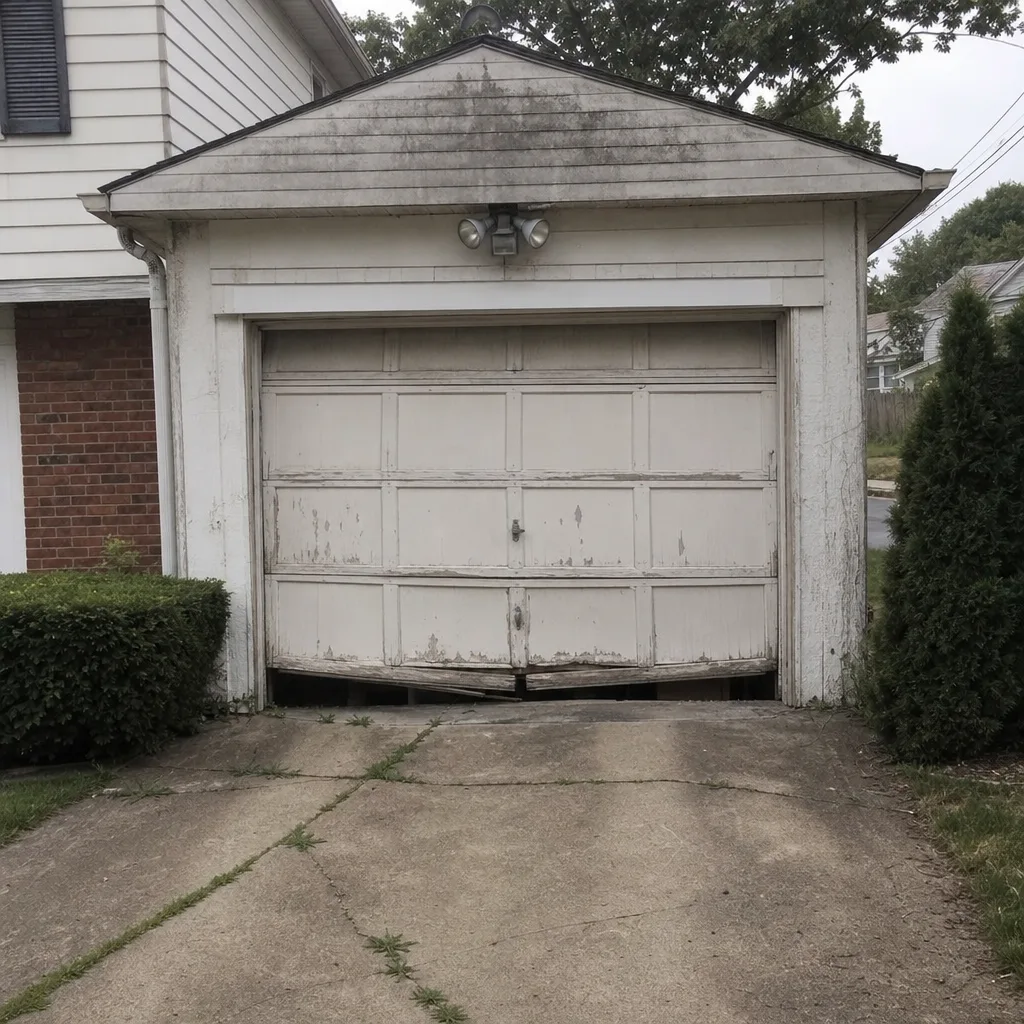 Before
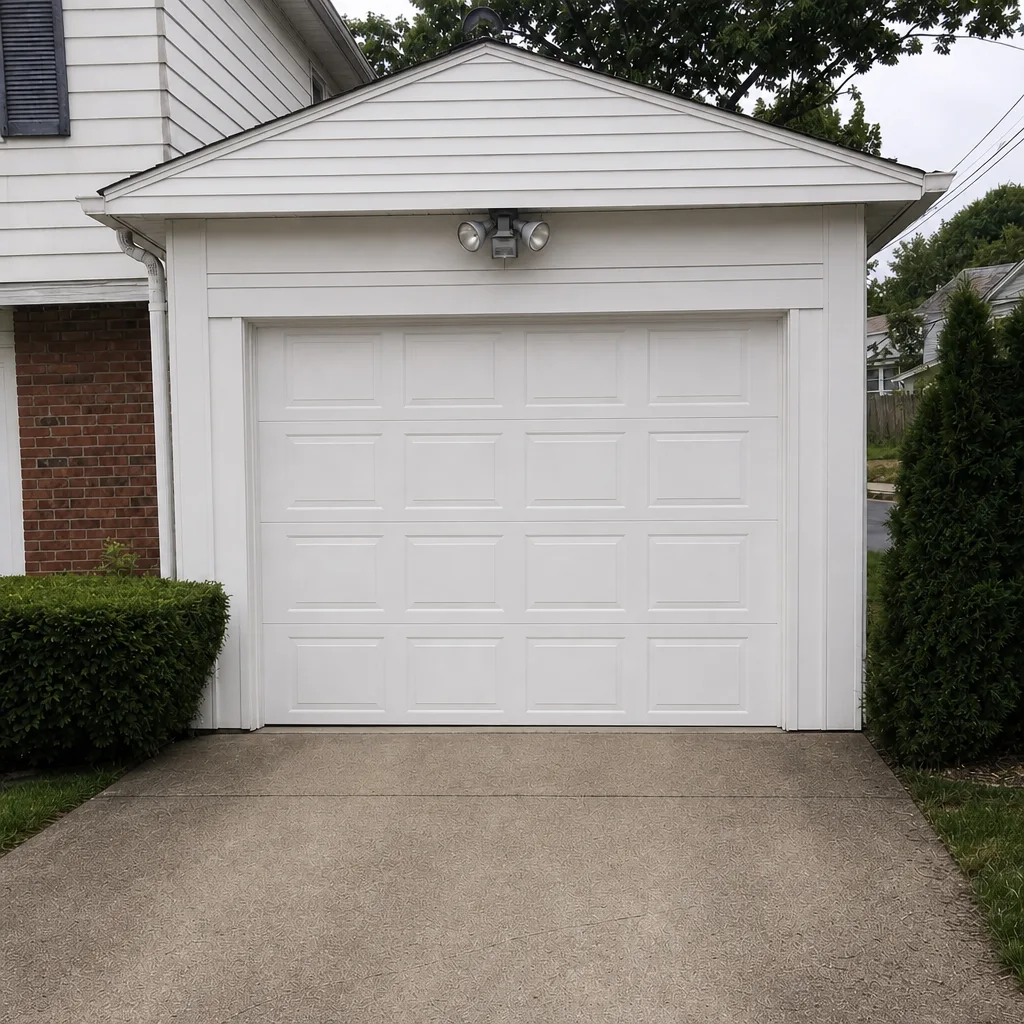 After
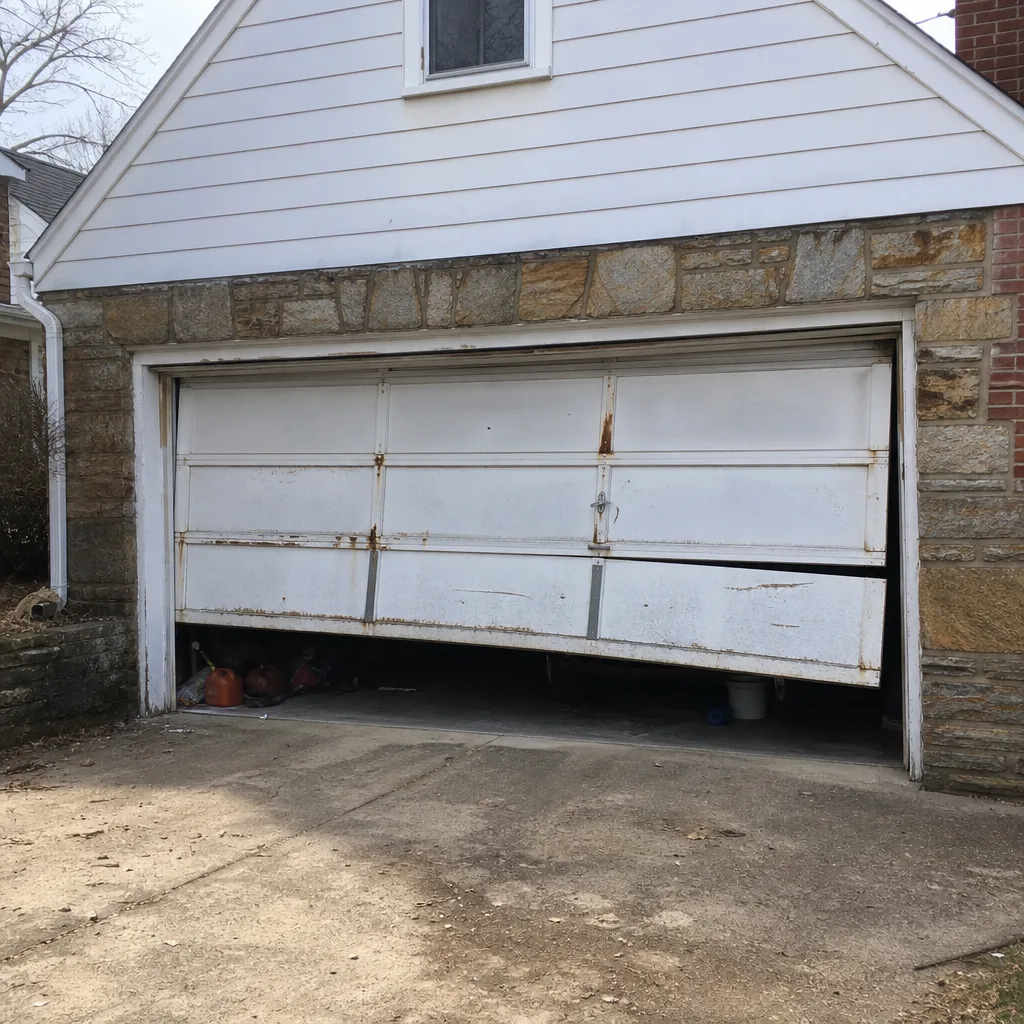 Before
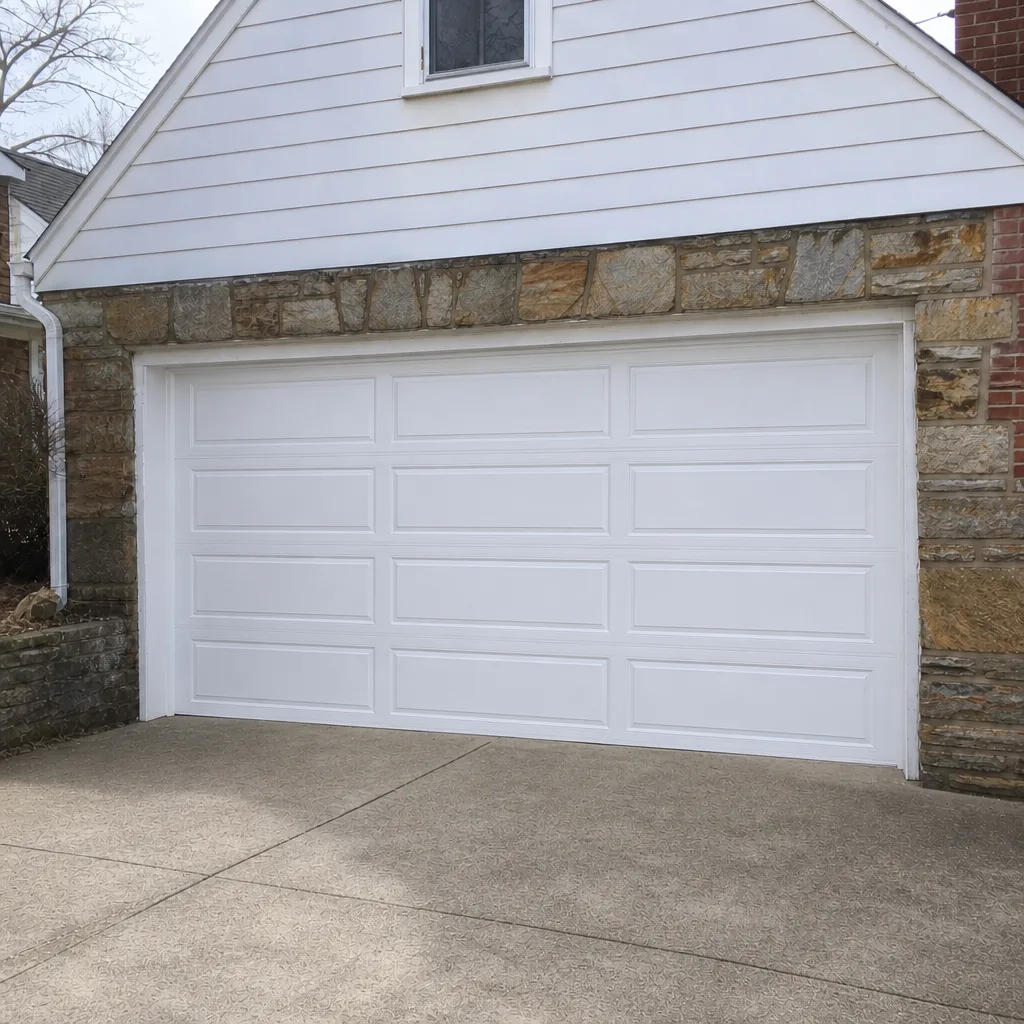 After
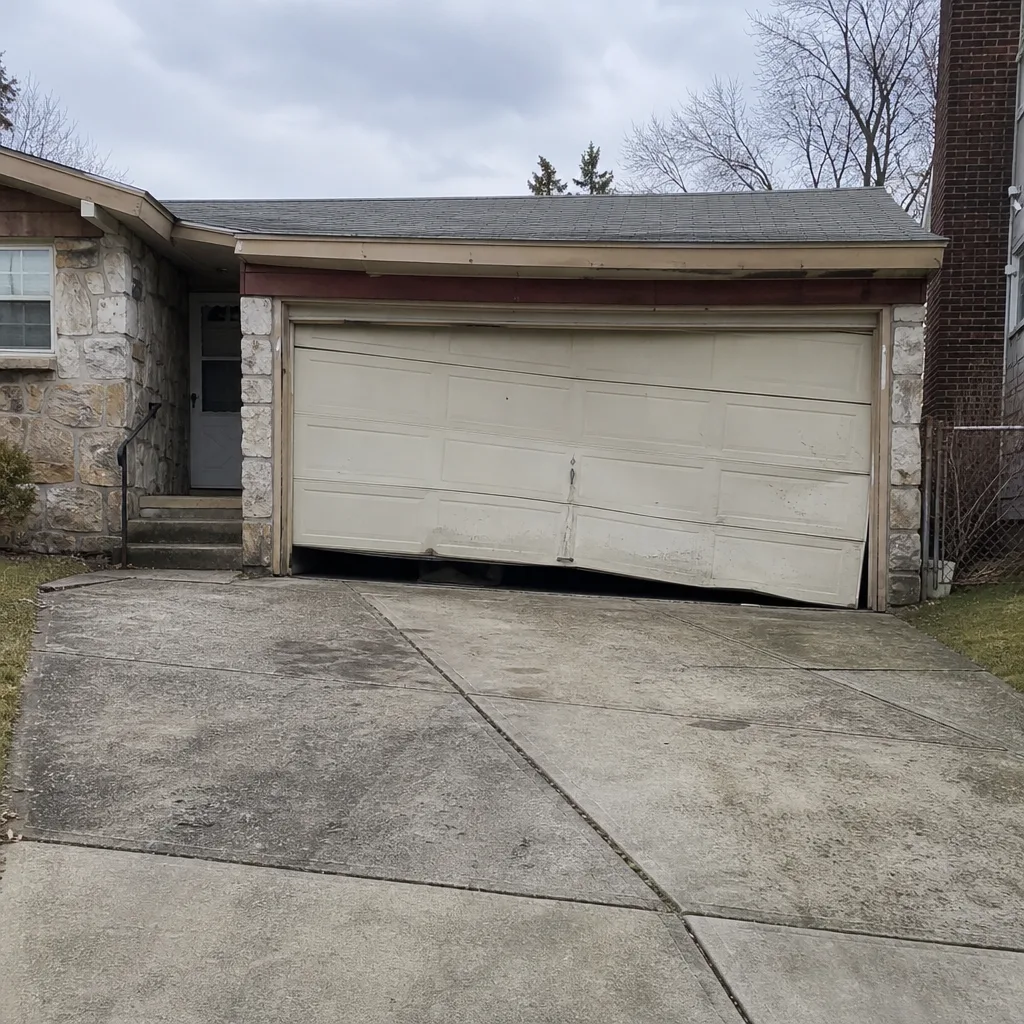 Before
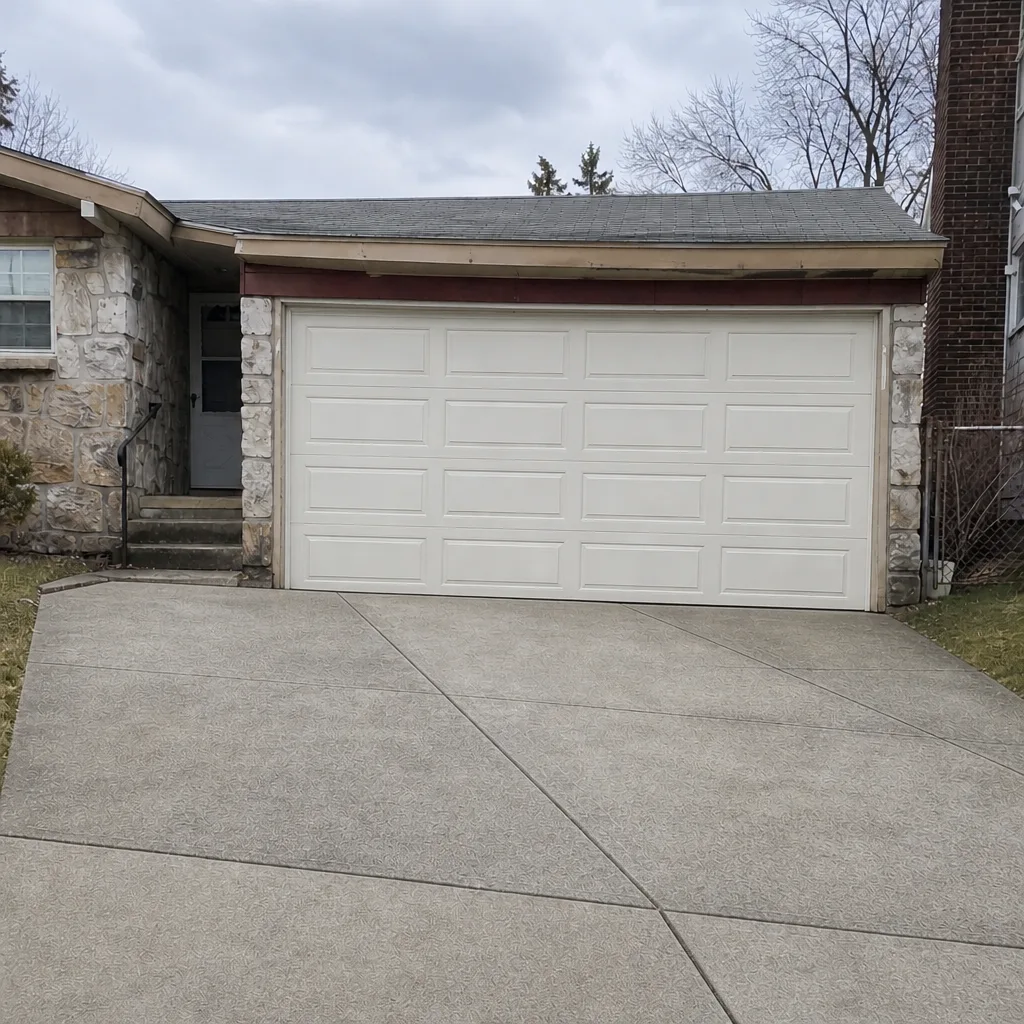 After
When to Call a Professional
Call when the door is off its tracks, when you see a frayed or snapped cable, when a spring has popped or looks visibly broken, when the door lifts a few inches and stops, or when the opener runs but the door doesn’t move. Those are same-day situations. Call before you cycle the door again, because every cycle on a failing spring or cable adds risk. For the smaller warning signs – grinding, squealing, remote lag, a gap at the seal – schedule the visit for this week rather than waiting for the failure. If you’re unsure which tier you’re in, describe the symptom over the phone and we’ll tell you whether it can wait. Garage Door Repair Rhawnhurst offers free estimates in Rhawnhurst – call (877) 492-3530. We answer 24/7. Fast dispatch from 7am to 7pm, Sunday through Friday.
Frequently Asked Questions
A popping or snapping sound when the door starts moving, followed by the door lifting only a few inches and stopping. A visible gap in the torsion spring coil or an extension spring hanging noticeably lower than its partner are the other two main signs. If you notice any of these, stop operating the door and call for service – springs are under extreme tension and should never be inspected by hand. Call (877) 492-3530 for an exact quote; estimates are free.
Not always, but usually. Grinding is metal-on-metal contact, and on most Rhawnhurst doors that’s a worn roller or a dry bearing in a hinge. It can also be a track that’s come loose and is rubbing the edge of the door. Either way, grinding means the door is dragging, which loads the opener and the springs. Schedule a diagnostic this week rather than waiting for it to get louder. Call (877) 492-3530 for an exact quote; estimates are free.
It depends, and that’s why we test the door by hand before touching the opener. On older Craftsman units, a hesitation at the top is usually the travel limit switch drifting. On newer units, it’s often a sign the door has gotten heavier because a spring has lost tension, and the opener is straining against it. The two fixes are very different, so the diagnosis has to come first. Call (877) 492-3530 for an exact quote; estimates are free.
Spring replacement typically runs $180 to $340 for one spring, and a matched pair costs about twice that because both springs are replaced together. Cable and roller repairs, opener diagnostics, and panel adjustments fall into their own ranges depending on what’s involved. We quote per job, and the written estimate sets the final price before any work starts. Call (877) 492-3530 for an exact quote; estimates are free.
Yes. A door stuck open is a security concern and we treat it as an emergency call. So is a door stuck closed when you need to get out. Call and describe the situation – we’ll tell you what to do while you wait, and we’ll get a technician to you as fast as dispatch allows. Call (877) 492-3530. We answer 24/7. Fast dispatch from 7am to 7pm, Sunday through Friday.
No. The written estimate sets the price, and we quote before any work starts. If we get into the job and find something the estimate didn’t cover – a bent track behind a damaged panel, or a second spring showing wear – we stop and talk to you about it before doing the extra work. You approve it or you don’t. Call (877) 492-3530 for an exact quote; estimates are free.
The local pro performing the work is licensed and insured as Pennsylvania requires. Our technicians specialize exclusively in garage doors and openers, not general contracting, and our team has up to 14 years of experience on the hardware. If you want to confirm credentials before booking, just ask. Call (877) 492-3530 for an exact quote; estimates are free.
Some can, some can’t. Grinding, squealing, remote lag, and a small bottom seal gap can usually wait until this week if the door operates smoothly. A popping spring, a frayed cable, a door off its tracks, or a hesitation that’s gotten worse can’t. When in doubt, describe the symptom over the phone and we’ll tell you which tier you’re in. Call (877) 492-3530 for an exact quote; estimates are free.
Is Saturday an option if that’s the only day I can be home?
We’re closed on Saturday. Dispatch runs Sunday through Friday, 7am to 7pm, and the phone line is answered 24/7. If a door fails on a Saturday, call and we’ll book you into the next opening, which will be Sunday. For non-urgent warning signs, a Sunday or early-morning appointment during the week usually works. Call (877) 492-3530 for an exact quote; estimates are free.
The Bottom Line
Most garage door warning signs don’t look like emergencies. They look like a slowdown, a new sound, a remote that needs two presses. The value of this guide is in matching the symptom to the cause so you know whether you’re looking at a same-day problem or a schedule-this-week one. Popping and snapping mean springs, and springs are a safety issue. Grinding means rollers or bearings. Squealing means hinges. Frayed cables and panel gaps have specific visual signatures of their own. Opener behavior is a separate diagnostic from door behavior, and mixing the two is the most common mistake. A door that’s serviced when the warning signs first appear is a door that doesn’t strand you on a morning you need to leave. If you’ve been watching one of these signs for weeks, that’s the signal to call.
Call (877) 492-3530 for a free estimate on any warning sign you’ve spotted. We answer 24/7. Fast dispatch from 7am to 7pm, Sunday through Friday, and a written price agreed before any work starts.
Written by the team at Garage Door Repair Rhawnhurst.